Author: Christophe

  • Delivering Satisfaction Through Planer Blades

    Knife-Point’s priority is to deliver satisfaction to their customers through their product ranges. Whether it’s planer blades for woodworking or trimming knife blades for the fitting of carpets, they continue to remain confident in saying that they have the tools you need to get the job done right.

    To ensure the long-term happiness of customers that spend money with them, Knife-Point follow a consistent process to make sure they tick all the boxes of good service. Whilst they understand that many of their clients will have the knowledge-base to make the educated purchases they need to, they’re always there to offer their advice and support if any problems do arise.

    Listening

    First and foremost, they understand the importance of listening to the exact needs of their customers. Knife-Point are not in the business of selling you tools that aren’t going to allow you to successfully complete your work. It might sound simple, but the first step they take to provide their clients with the planer blades that they need is simply listen to their exact requirements.

    Expert Advice

    Since Knife-Point have so many products available for their customers to choose from, they’re always happy to offer their advice on the ones which would suit best. Thanks to their many years experience within the knife manufacturing trade, they can do this to optimum effect. As a result, you’ll feel even more confident in the quality of any purchases that you make with them.

    Great Choice

    Knife-Point understand the importance of choice. It’s no good matching the wrong tool to the wrong application and they help their clients to avoid this problem by giving them the freedom to pick the appropriate planer blades they need. Options with relation to pricing, quantities and blade type are always on offer with them.

    Prompt Planer Blades Delivery

    For Knife-Point, it’s essential that their customers are able to gain access to the tools that they need swiftly and easily. They ensure their happiness in this way by making sure they continue to offer speedy delivery times right across all of their product ranges. By doing so, they regularly receive repeat business from customers who’ve been impressed with the service that they’ve received from them.

    Planer Blades Top Supplier

    As the leading supplier of planer blades to the Sheffield area and beyond, Knife-Point are continuing to expand their large client base. As well as the products covered here, they also supply trimming knife blades, Swann Morton products, Stanley knife blades and snap off blades too.

    Throughout all of these ranges, the attention they pay to their customers and the vast product choice they offer remains the same. To find out more and access their fantastic range of blades today, head over to their website home page – www.knife-point.co.uk. Or, if you’d like to speak to them directly, call 07737 133 030.


  • Protected: How to setup Seven Creative email on iPhone or iPad

    This content is password-protected. To view it, please enter the password below.

  • Restaurant, bar & hotel marketing – the fast way to get more customers     

    We’re in the midst of the Coronavirus lock-down at the moment but the restrictions on movement will be relaxed soon. Before we know it, pubs, bar, clubs and restaurants will be open again. The problem is, though, will the customers be as fast to start socialising and eating out again? How do we market our pubs, bars, clubs, and hotels? Is this even the right time for restaurant, bar & hotel marketing? 

    Restaurant, bar & hotel marketing – the fast way to get more customers
    Restaurant, bar & hotel marketing – the fast way to get more customers

    The last recession was very tough for nearly all businesses but there were some very interesting lessons learned. The most important one, however, is that you can’t be complacent. The successful business that came out of the recession stronger than ever were the ones that realised they had to ‘up their game.’ They knew that it would take time for things to return to normal so they had to fight for the customers or go bust. Many of the organisations who simply ‘battened down the hatches’ and stopped investing in their business went under. Now is the time to start your restaurant, bar & hotel marketing

    How to get more customers – restaurant, bar & hotel marketing the easy way

    I’ve been in sales & marketing for as long as the internet has existed. Since before Google, Twitter and Facebook existed. Even before smartphones and mobile data. The amazing thing over this time has been the change in customer behaviour. We don’t ‘take a punt’ on a new restaurant anymore. Rather we ‘check it out online’ first. We check the website and read the menus. Look at the photos and explore the virtual tour. If we’re not 100% sure it’s the place for us we hot ‘back’ and go to the next listing on Google. This is why it’s so important to get it right first time

    How to get new customers for bars, restaurants, and hotels

    1 – First of all make sure your website is up to scratch from the visitors perspective. Your customers don’t need much – don’t make it difficult for them to find what they need! On your website, make the following information very prominent; Opening times, your location & parking (with a link to Google Maps), reservation information if available, menus (please not in PDFs!!!), and any specials or happy hour info. This is the most important thing to consider when thinking about your restaurant, bar & hotel marketing

    2 – Make sure you have good quality and accurate photos (please no stock photos!)

    3 – A good quality virtual tour is the number one factor in choosing a restaurant, bar or hotel. If your new potential customers are able to explore by themselves when it’s convenient for them, you’re much more likely to get them to visit in person.

    4 – Next, make sure your website can be found. There is a very nice article on DIY SEO here, however, I’d recommend hiring an expert SEO to optimise your site and build a few links for you whilst they’re at it

    5 – Make the most of what Google has to offer. Get your virtual tour on Google Maps, Google Search, Google Street View, and Google My Business. This is all part of getting a virtual tour done. See this article on integrating your virtual tour into Google

    What next?

    Here is a list of suppliers you may want to get in touch with:

    Web development (click here) – make sure your website is up-to-scratch. Click here for good quality web development

    Virtual tour & photography (click here) – good quality photos and a high-quality HDR Matterport virtual tour are two of the most important things you’ll need. Get a quote for a virtual tour here

    Search engine optimisation (click here) (SEO) – get your site indexing on Google and make sure new customers can find you – Click here to find out more about Search Engine Optimisation

    Google virtual tour integration (click here) – get your photos and virtual tour on Google Maps, Google Earth, Google Search and Google Street View with a Trusted Google Photographer


  • The quick guide to the basics of SEO

    Search engine optimisation (or SEO as it’s more commonly known as) has many definitions but I prefer to describe it as the practice of improving your visibility in search engines for relevant search terms. Better visibility can be called higher rankings (or closer to page 1, result 1) and relevant search terms are words or phrase directly connected to the purpose of a website. Incidentally, Google describes SEO as ‘the process of making your site better for search engines’. The noun ‘SEO’ is used to describe someone like me who makes a living improving the search position of websites e.g. ‘I need to hire an SEO to get my site ranking’. It’s also quite common to use SEO as a verb e.g. to SEO a website or page.  

    This guide will focus on Google as they’re by far the largest search engine.

    1. Check your site is on Google

    Do a Google search for ‘site:’ followed by your website URL, for example, to find out if the website sevencreative.co.uk is on Google, search ‘site:sevencreative.co.uk’ (click here to see the results)

    If your site isn’t there, it’s probably due to one of the following reasons:

    • You don’t have any indexed links to your site
    • Your site is very new
    • Your site (or server) either blocks Google from indexing it or the search engine simply can’t read your site
    • Google has blocked your site from the search results (there could be lots of reasons for this)

    If you’re not sure why your site isn’t on Google when you think it should be, it might be time to call an SEO expert. Get in touch with us on 0114 383 0711

    2. Making your website content good for visitors makes it good for Google

    “Make your site interesting and useful” – Google

    Your website text and images need to be clear and relevant, and the titles and higher-up-the-page content is more important than the stuff lower down the page. For example, if the title of the page was simply ‘welcome’, it wouldn’t provide any real value to your visitors, it doesn’t mean anything out of context, and it probably has very little to do with the purpose of your site. Let visitors know what your site does quickly and efficiently in all titles and text with relevant narrative images. The title of this page is ‘The do-it-yourself guide to the basics of SEO’ and it’s a page about the basics of SEO. You know what the page is straight away and so does Google.

    When I explain to someone how to write a page I tell them there are three types of visitors you’ll get – those who skim the page quickly looking for the words and phrases they hope to see, those who will take the time to read every single word, and those who use are more included to use pictures to understand what a website page is about. Get the purpose of the site in the headings, explain the purpose well in the other content, and explain the site well with illustrative and relevant images. You need to cater for all these three people. In doing that you’ll also be catering for Google.

    Pro tips: Aim for at least 300 words per page if you can and be sure to give all your images ‘alt’ descriptions to explain to Google and those using screen readers what they are about.

    3. Make use of the ‘description’ meta tag – this explains to Google what the page is about

    This information is not displayed as part of your web-page but it used by Google to understand and display what your page is about.

    4. Optimise your images

    This is surprisingly important from an SEO perspective. Crop, size and compress your images to load quickly on your website. If you don’t have Photoshop try GIMP – it’s a free image editor

    5. Make your site mobile-friendly

    For many sites these days, most of their visits are by people using their smartphones. If your site isn’t able to be read and used properly by people using smart phones, your site may be penalised by Google

    6. Use your Google My Business page

    Yes, Google use this as a signal about whether your site is legitimate or not. Improve their content and they’ll improve your rankings.

    7. Make sure you have a sitemap and submit it to Google

    A sitemap is an index of all the pages on your site you’d like Google to visit (and also sometimes those pages and directories you’d order not be included in the search results). This is very important as it allows Google to know about pages that it might not necessarily find very easily.

    Sitemaps are commonly in XML format which is a simple but formal way of listing repetitive information in a file that allows the search engines to read it. Sitemaps are commonly in the same directory as the site’s index file and are normally simply called something along the lines of ‘sitemap.xml’. The main sitemap for this site is located here: https://staging.sevencreative.co.uk/sitemap_index.xml

    Not all sites automatically have a sitemap – sometimes you need to create one yourself and upload it to your site. If you’re using WordPress there are several plugins that will do this for you like Yoast or Google XML Sitemaps.

    8. Make sure you have an up-to-date and functioning robots.txt file.

    A “robots.txt” file tells search engines which files and folders it would like it to be able to access and asks it to not access others. Whether or not the search engine follows these requests, however, is a different thing. Google, however, does use the Robots.txt file and is therefore very important to get your site indexing properly. This file, which must be named “robots.txt”, is placed in the root directory of your site.

    Do you need a head start with your SEO?

    Give us a call here at Seven Creative if you need a head-start with your SEO. Whatever the age or subject of your site we can improve its position in the search results. Call us on 0114 383 0711 or use our contact form

  • Microsoft Exchange hacked? What now?

    Microsoft Exchange hacked? What now?

    If your Microsoft Exchange account has been hacked, you’re probably panicking and wondering what to do now. Here is a list of steps to take. It’s not exhaustive but should get you at least back up and running with a secure account.

    Why was your account hacked?

    Hackers want people’s usernames and passwords which may then allow them to access their online accounts. They’ll often do this using a technique known as ‘phishing’ – they’ll send an email purporting to come from a legitimate source but linking to fraudulent websites that are designed to steal personal data or information such as credit card numbers, passwords, account data, or other information.

    They hack your account to send their phishing links to your contacts as they know an email sent from a known contact is much more likely to be trusted by the recipient, and an email from a previous contact is much more likely to get through a spam filter. In other words, they want your contacts username and passwords and will pretend to be you to get them.

    Start by changing your password

    If you can still log into your account, change your password. If you can’t, can you do a password reset? If this isn’t setup, does your Exchange administrator have access to do this for you? If not, contact Microsoft Exchange support directly as soon as possible to secure your account

    Check your Mail Flow rules

    A hacker wants your account to remain accessible to them for as long as possible so it’s not always very likely that they’ll change your password themselves – you’ll know something’s wrong straight away if this happens. Rather they’ll make sure that any reply emails sent to you by confused contacts won’t arrive in your inbox meaning you’ll not see them. The only other place you’re likely to check if you stop receiving emails is your junk folder but it’s more likely that the hacker will have created a rule to instead send all received emails straight to your deleted folder. Therefore, check your mail flow rules to make sure emails aren’t being redirected somewhere else.

    Check your sent items

    I don’t necessarily mean your ‘sent items folder’ (although a look here too won’t go amiss). Rather check which emails have been sent using the ‘message trace’ search function in the ‘mail flow’ section of the Exchange admin. This will show you which emails were sent from your account and to whom they were sent. When you’re back up and running, you may decide to send an email to anyone who received an email from your account sent by the hacker – this is where you’ll find out who that was.

    Check your auto-responders

    Does everything here look how it should be and how you left it?

    Check your RSS feeds

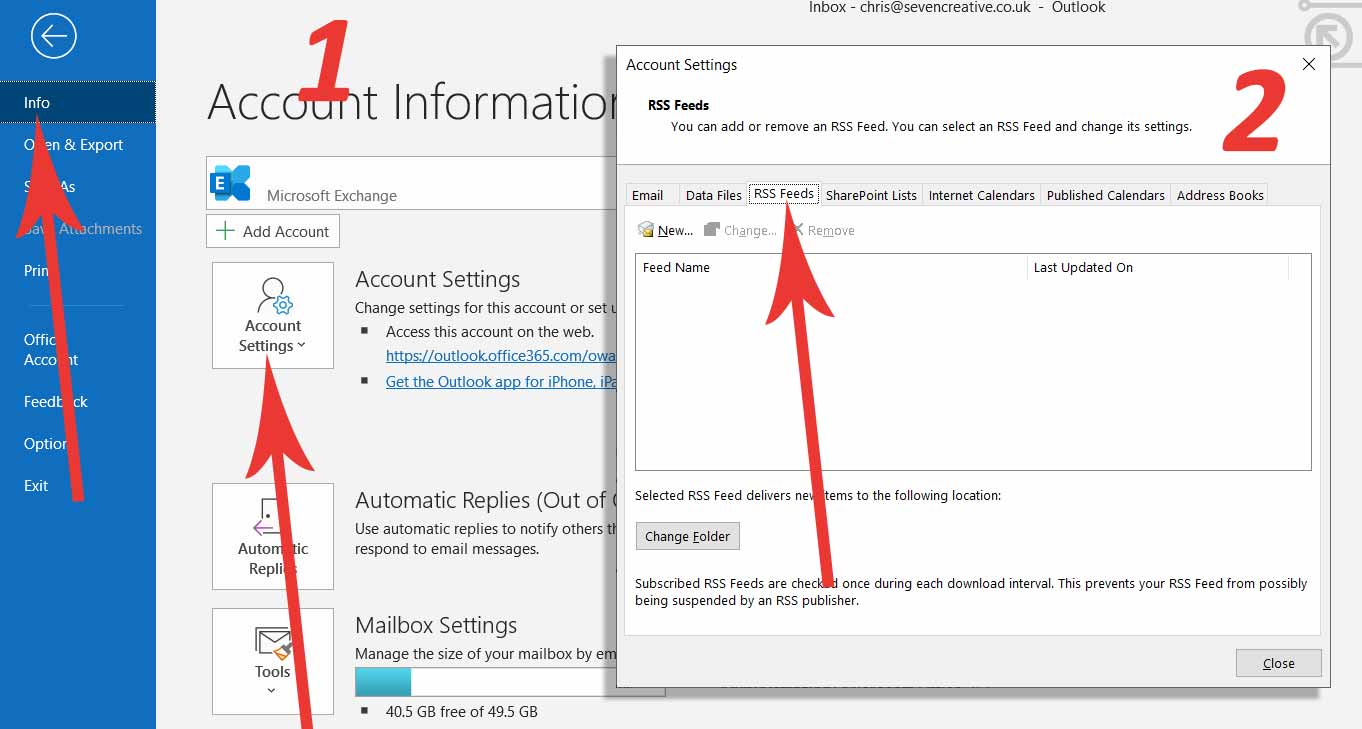
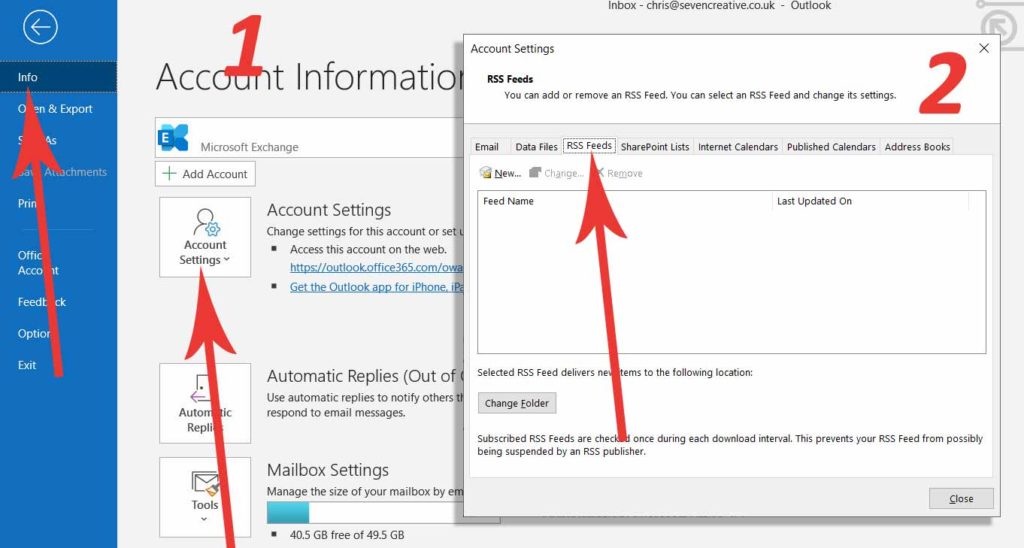
    One of the ways hackers will access important emails is by creating an RSS feed. To check this from Outlook, go to the file option (top-left), select ‘account settings’, then select the RSS tab in the following window.

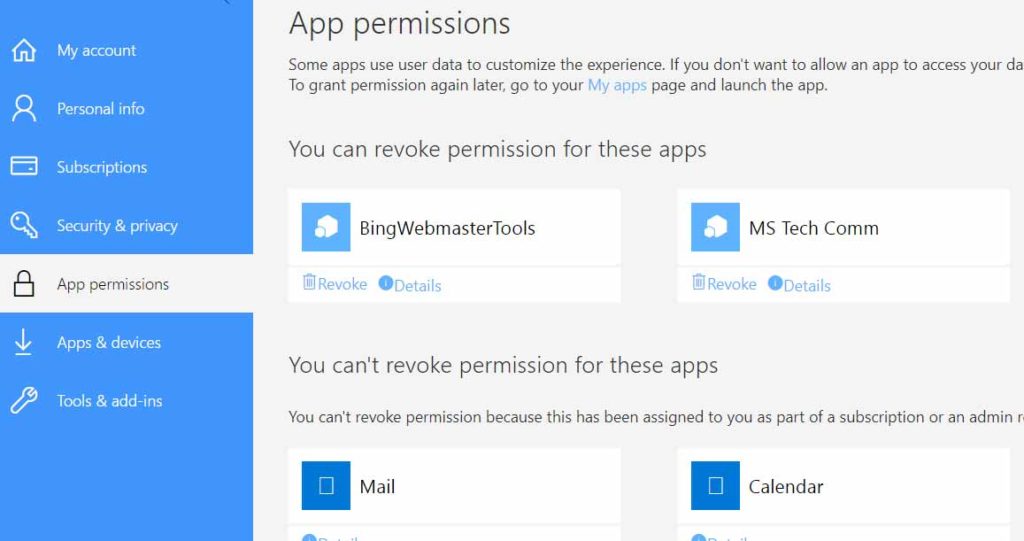
    Check app permissions via your online account

    Anything else?

    Once you’re back up and running and your Microsoft Exchange is secure, consider enabling 2-factor-authentication and of course it’s a good idea to make sure you’ve got good quality anti-virus software running.

  • Avoid These 4 Planer Blades Mistakes

    Quality end results are a sure way to ensure satisfaction when it comes to product creation. One of the ways you can stay happy is through the consistent application of the most reliable tools; which is something Knife-Point are accustomed to providing to their customers. With a great selection of cutting products, this Sheffield-based knife supplier continues to help tradesmen working across a number of different sectors. One such group of clients are those who are employed within the woodworking field. These individuals regularly require top quality planer blades to best do their jobs; which Knife-Point are always able to supply. By using planer blades purchased directly from them, you can help yourself to avoid the sort of pitfalls people who are using unreliable alternatives can fall into. Knife-Point have listed some of the things you can look forward to leaving behind when you move to them as your regular supplier:

    You Won’t Achieve Accurate End Results

    Whether you’re knowingly or unwittingly using the wrong planer blades, you can be sure that the end results will be the same. If you’ve not taken the time to research the type or size of blade you need, then it’s likely you’ll not see the realisation of the finished products that you’re aspiring towards. If you research the tools you need in detail, you’ll reap the rewards when it comes to the date of completion.

    You’ll Waste the Materials You’ve Bought

    The problem with not achieving the end results that you’re hoping for is that you’re likely to have to start again. As a result of this, you’ll lose the monetary investment that you’ve dedicated towards the materials you’ve used in a project, so it’s a given that you’ll feel frustrated as a result. Choose the right cutting tools from this point forward and you can pre-empt the issue.

    Nobody Likes to See Their Time Wasted

    As well as your money, you can also end up losing time due to the use of poor quality planer blades. Selecting the right ones from the start – and then making sure that you keep them in pristine working order – can help you to avoid the unwanted scenario of looking back negatively at time you’ve wasted.

    Don’t Lose Customers

    Most importantly, you’re not going to satisfy your customers with the products you produce unless they are of an immaculate quality. You can help achieve consistently superb standards with our help of Knife-Point’s tools, which will enable you to retain your existing clients and add more to go with them when your reputation for attention to detail grows.

    Knife-Point Lead the Way for the Supply of Planer Blades

    Knife-Point supply planer blades in abundance, offering choice with relation to both order quantity and blade size. Further to this, they also continue to supply, snap off blades, trimming knife blades and Swann Morton blades; as well as many more cutting tools. To find out more, you can call them on 07737 133 030; or send an email to sales@knife-point.co.uk.

  • What is search engine optimisation (SEO)? A quick guide

    What is search engine optimisation (SEO)? A quick guide

    SEO helps websites improve their rankings in search engines – ranking well in Search Engines can be very lucrative

    Search Engine Optimisation (otherwise known as ‘SEO’) is an activity designed to help websites improve their rankings in search engines (in particular within Google with around 90% of all searches, and within Bing, the second most visited search engine.) there aren’t many websites that don’t need to rank well in the search engines, so for the vast majority of sites, the closer to position 1 on page 1 of the search results for their keywords and phrases, the better. Search engine optimisation can be difficult & very technical, but a well optimised site can be very lucrative for the owner, so there are companies around the world now who provide high quality search engine optimisation services, for example, Seven Creative, an SEO agency in Sheffield.

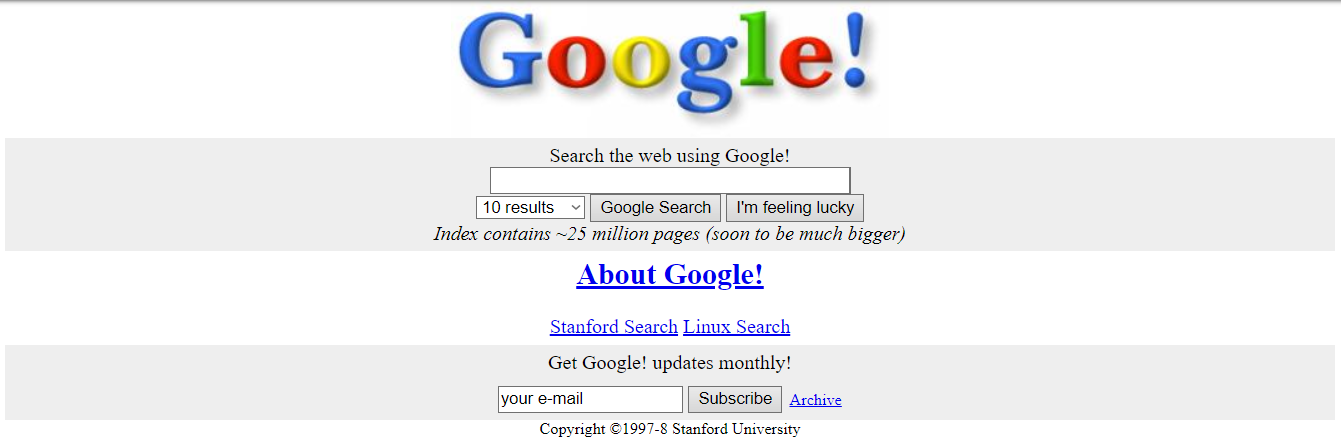
    The Google homepage from 1998. At the time of writing, Google is the largest search engine accounting for around 75% of market share
    The Google homepage from 1998. At the time of writing, Google is the largest search engine accounting for around 75% of market share

    Although Google is not by any means the only search engine, it is certainly the largest and most well known around the world, so this is, certainly in the western world, the search engine usually focused on.

    To understand Search Engine Optimisation, we need to first understand the process of ranking. In the most basic form, we have potential customers and we have website that would like to be matched with these customers. Google simply provides a way to do this. You type in what you are looking for, and Google provides you with a list of potential websites that match your request. The problem is, though, we want exactly what we are looking for without having to do any of the work ourselves. In other words, we want the best result returned to us first (or as close as possible) so Google has to work out dome way of making sure that happens (so you don’t start using a different search engine!)

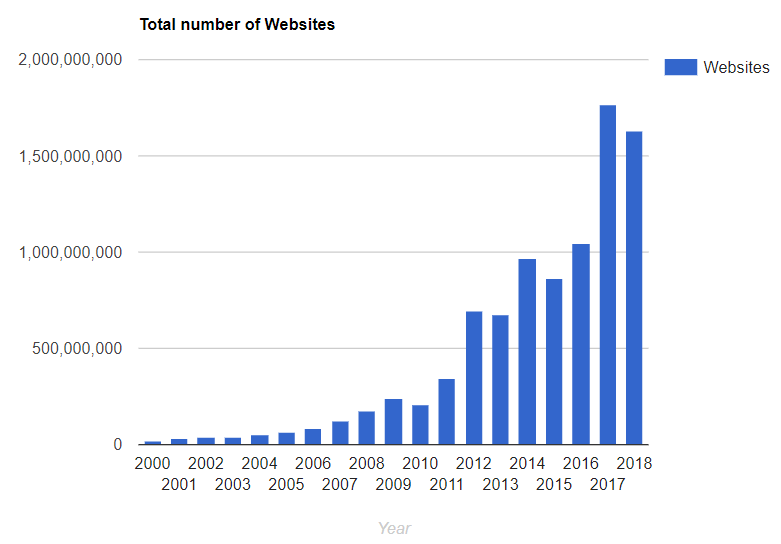
    Total number of active websites by year
    Total number of active websites by year

    Obviously there are far too many websites on the internet to be hand-curated by individuals, go Google uses an ‘algorithm’ to determine what are the best results to return for a particular search term and in what order to display these. And Google is very good at doing this! For example, how often do we venture further than the first page? Not very often! And this is because we’ve usually found what we’re looking for within the first 10 results.

    This algorithm uses many, many different factors to evaluate a website and determine its authority on a particular subject or its relevance for a particular phrase. As website owners, many search engine ranking factors or out of our control, however, there are a lot we can control. The search engine optimisation you’ll commission from a company, such as Seven Creative (an SEO agency in Sheffield) will be able to optimise your web pages, your website and your linking structure (inbound, outbound and internal links). Most of it isn’t rocket-science, however, its often complex, time-consuming, and the results can take many months to properly materialise.

    I suppose the take-away from this article is that, SEO is something that to do properly, you’ll need the help of a professional. However, for the best long-term results, focus on the on-page optimisation first and also learn good practice and habits with regards to creating new pages – after all it’s a lot easier and cheaper to do the SEO as you go as opposed to having to pay someone to go back and do it later on!

    PS you have probably noticed that this article is designed to help improve the search rankings of the website www.sevencreative.co.uk – or rather the specific page sevencreative.co.uk/seo-agency-in-sheffield/ – within the search engine rankings, for the phrase ‘SEO agency in Sheffield’. Whereas this article isn’t exactly what we’d describe as a ‘perfect’ example of an search engine optimised article, it’ll certainly go a long way to improving the position in the rankings of the page it’s referring to. This, in combination with many other activities such as ‘on-page optimisation’ will increase its position in the rankings and start to increase traffic to that page. Whether or not the page itself convinces the visitors to pick up the phone is a whole different kettle of fish (or Conversion Rate optimisation aka CRO)

  • The best & most hilarious Amazon reviews (updated)

    The best & most hilarious Amazon reviews (updated)

    From a bottle of methylated spirit being described as “a drink to enjoy with friends in a park”, to tin foil deemed “by far the best for making aluminium shield hats to ward of aliens”, site back and enjoy the best of spoof Amazon reviews!

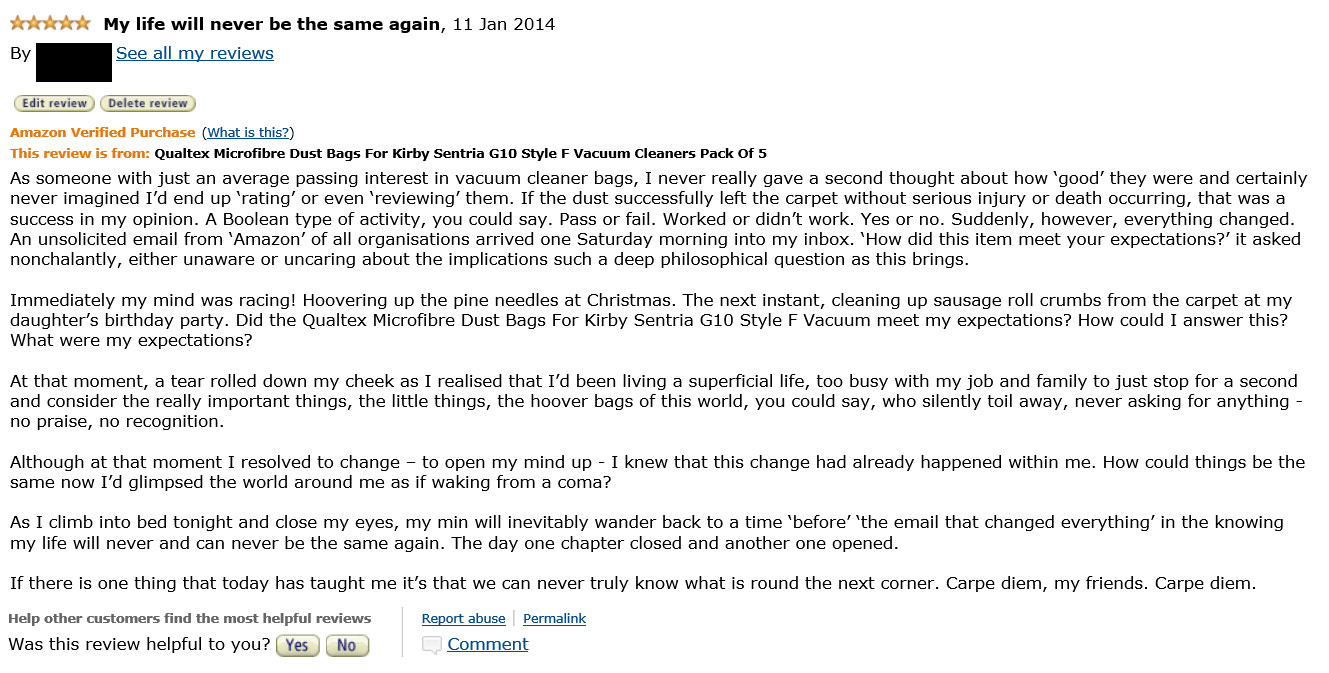
    The first line of this one nearly made me spit my tea out.

    Amazon Kirby Bag review
    Amazon Kirby Vacuum Cleaner Bag review
    One of the greatest inventions in human history?
    That feminine, tingling feeling…!
    Revenge is a dish best served cold… but better late than never!
    How to grow a moustache
    Wrong, so wrong!
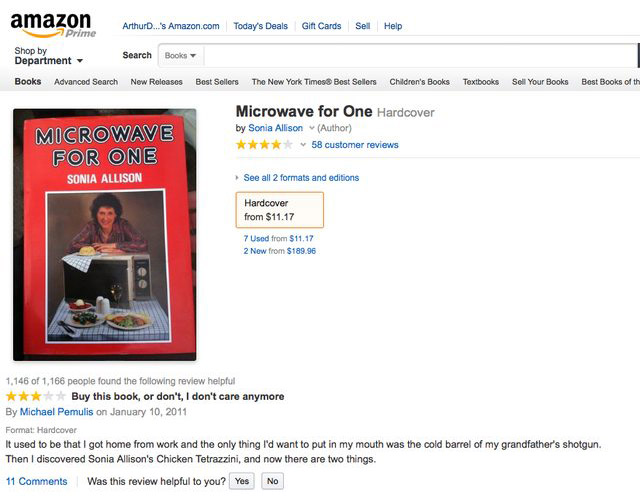
    Microwave for One
    Microwave for One
    19 of 26 people found the following review helpful
    19 of 26 people found the following review helpful

    The Observer attributes the craze to ‘the original spoof reviewer’ Henry Raddick, who famously reviewed The English Cocker Spaniel Handbook. Raddick, who had a pet spaniel called Barry, wrote, “I enjoyed the book immensely and, although I have a sneaking suspicion that Barry is using the book as porn, I wholeheartedly recommend it.” Raddick continued, “I’m reassured to read that the sin of Adam is not upon Barry even though he does not accept Christ as his saviour.”

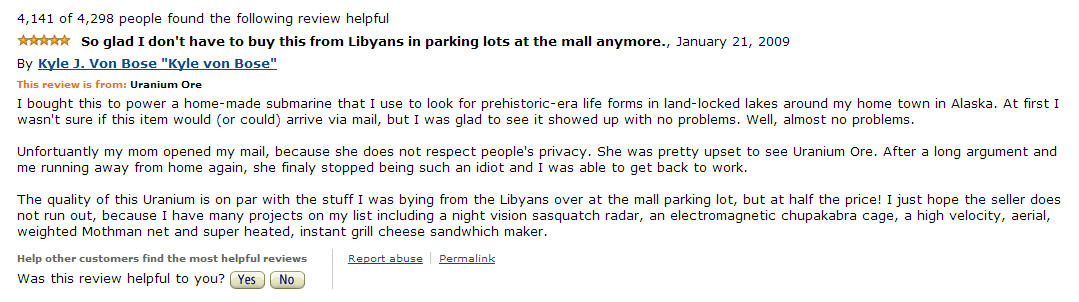
    Spoof Amazon Uranium Ore review
    Spoof Amazon Uranium Ore review

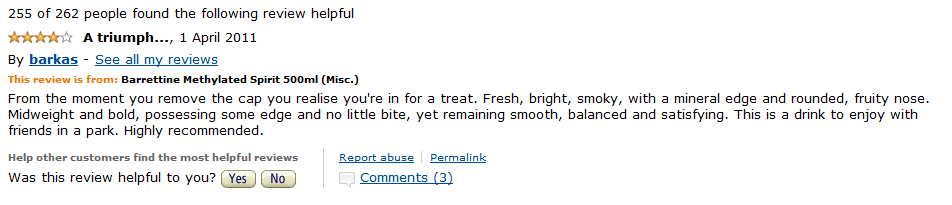
    As for the bottle of Methylated spirit, a reviewer named ‘Barkas’ enthused: “From the moment you remove the cap you realise you’re in for a treat. Fresh, bright, smoky, with a mineral edge and rounded, fruity nose. Mid weight and bold, possessing some edge and no little bite, yet remaining smooth, balanced and satisfying. This is a drink to enjoy with friends in a park. Highly recommended.”

    This particular spoof review has also played havoc with Amazon’s famed algorithms, which enable the site to recommend buyers other products they may be interested in, based on what they have bought previously. The glowing review in question caused Amazon to recommend methylated spirit to customers who had bought bottles of Chateau Latour.

    Spoof Amazon review for methylated spirit
    Spoof Amazon review for methylated spirit

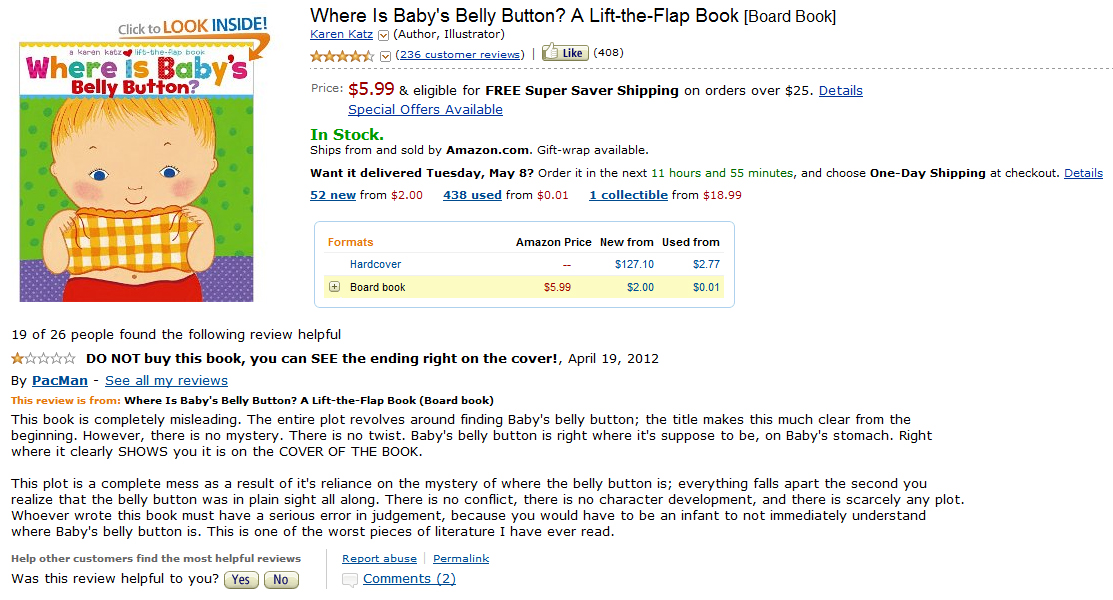
    Our favourite is a serious literary review of a book intended for young children. The reviewer hilariously calls the book ‘misleading’ as he/she vents their disappointment that the entire plot of the story is revealed in the title. “There is no mystery. There is no twist. Baby’s belly button is right where it’s supposed to be, on baby’s stomach. Right where it clearly SHOWS you it is on the COVER OF THE BOOK.” The mystery reviewer also complains that “there is no conflict, no character development, and scarcely any plot.”

    We’ve bought a fair amount of stuff from Amazon here at Seven Creative Towers.  We always take the reviews with a pinch of salt and make sure we consider the spectrum of star ratings, but there are few that leave us rolling on the floor laughing. As for detracting from honest, helpful reviews, we think it’s nice to have a bit of comedy.

    Hurrah for bringing satire to Amazon!

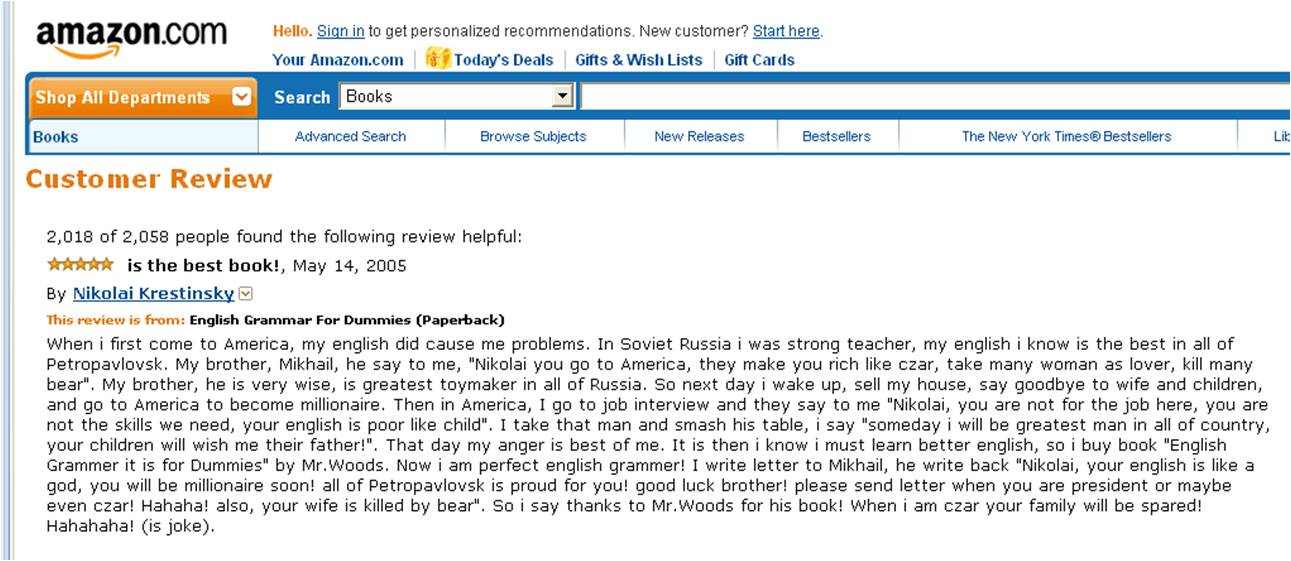
    Spoof Amazon review for English Grammar for Dummies
    Spoof Amazon review for English Grammar for Dummies
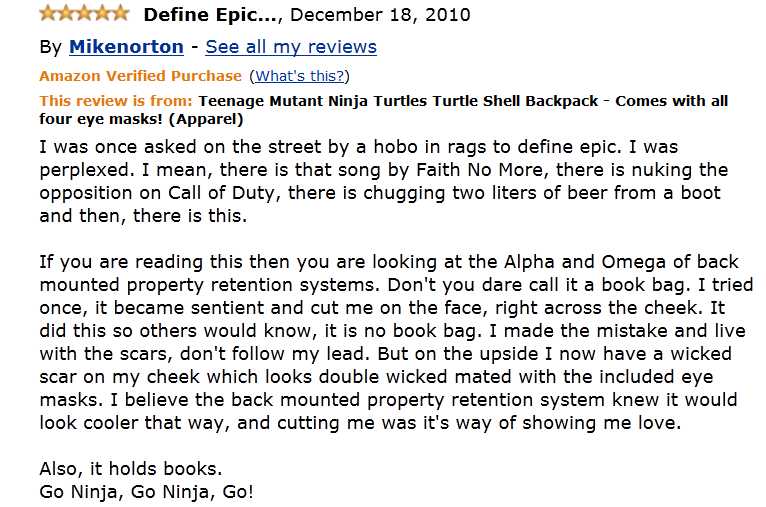
    Spoof Amazon review for a turtle backpack
    Spoof Amazon review for a turtle backpack
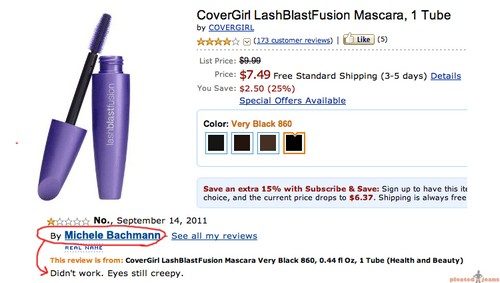
    Spoof Amazon review for mascara
    Spoof Amazon review for mascara
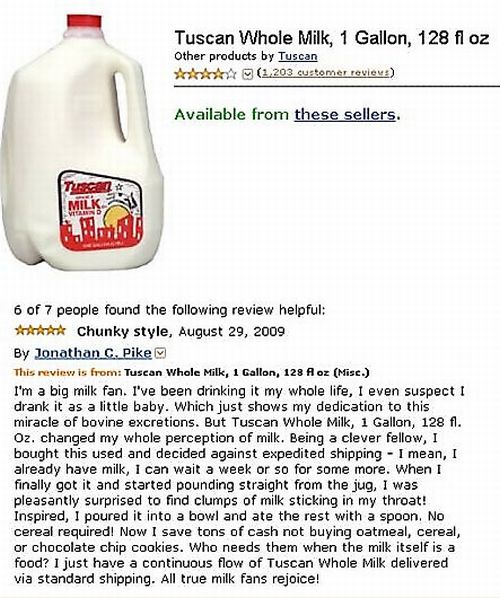
    Spoof Amazon review for milk
    Spoof Amazon review for milk
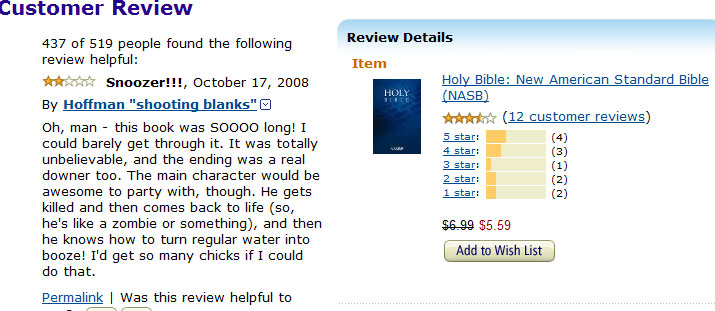
    Spoof Amazon book review
    Spoof Amazon book review
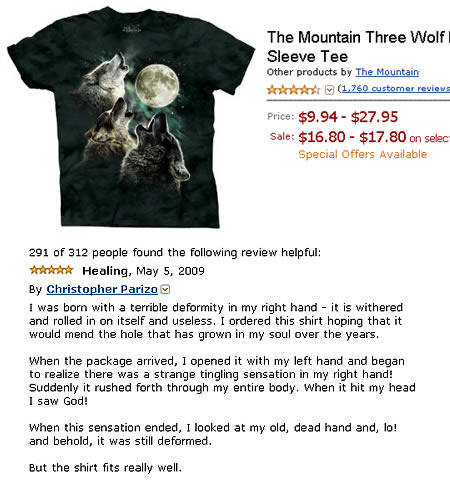
    Spoof Amazon t-shirt review
    Spoof Amazon t-shirt review
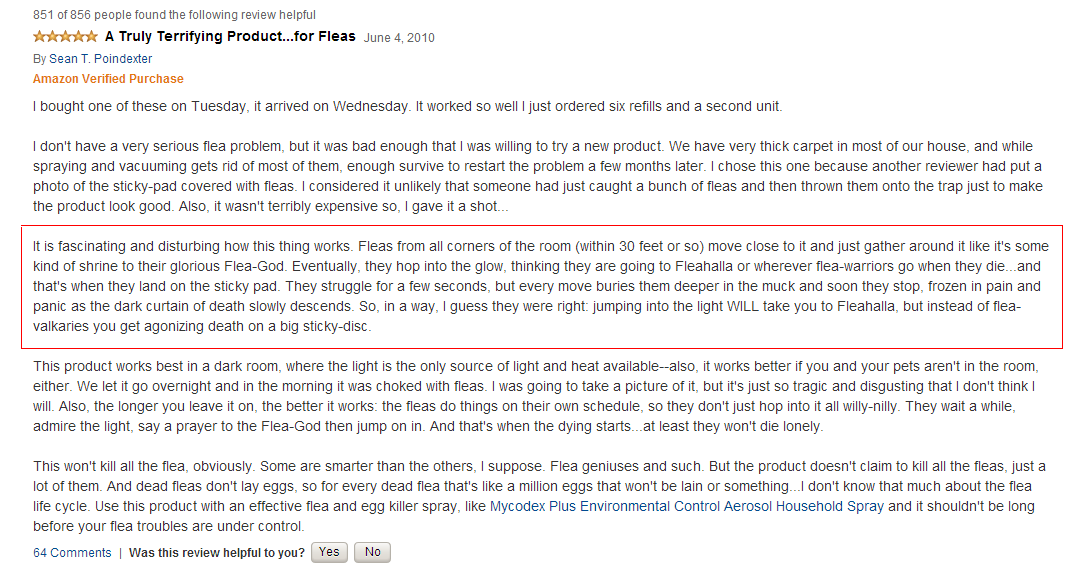
    Victor M230 Ultimate Flea Trap
    Victor M230 Ultimate Flea Trap
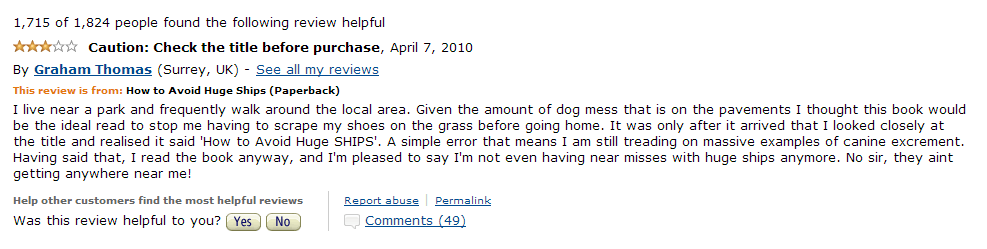
    How to Avoid Huge Ships
    How to Avoid Huge Ships
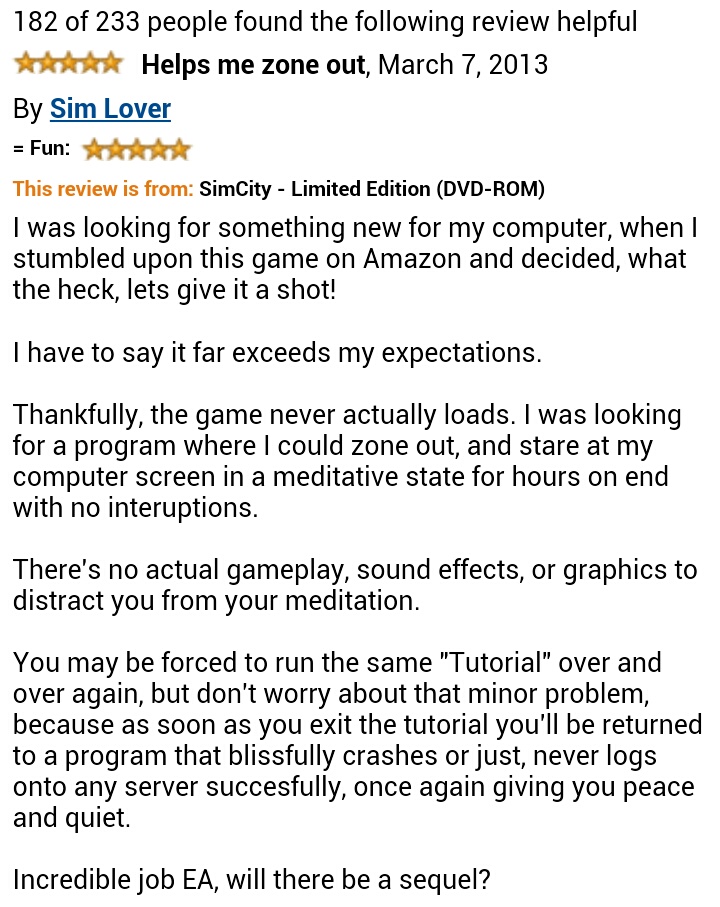
    Sim City review
    Sim City review
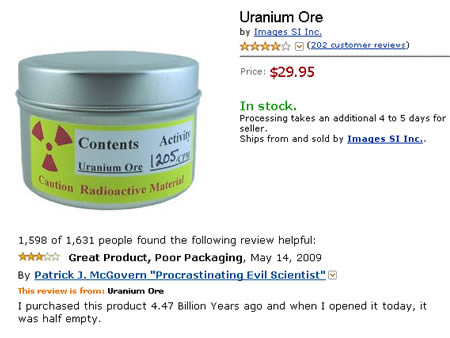
    Uranium Ore
    Uranium Ore
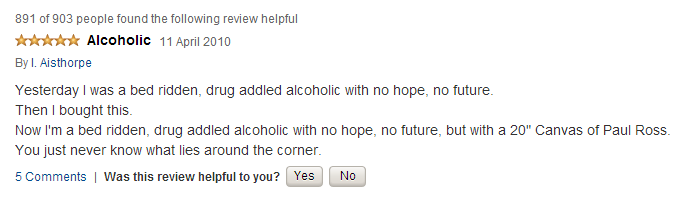
    Paul Ross
    Paul Ross
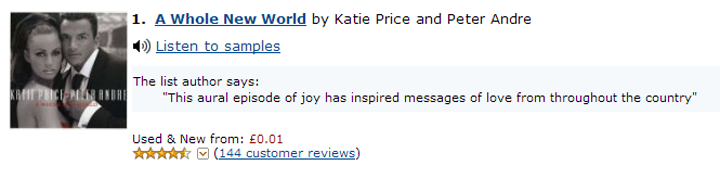
    A Whole New World - Peter Andre and Jordan
    A Whole New World – Peter Andre and Jordan
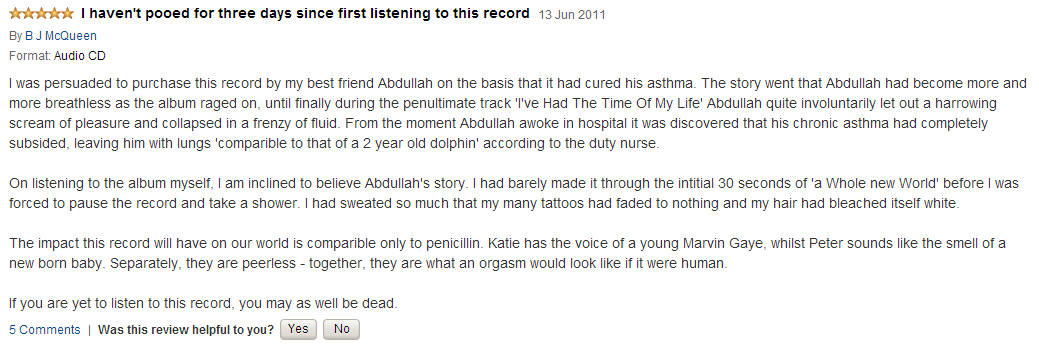
    A Whole New World again
    A Whole New World again
    Paul Ross 20" canvas
    Paul Ross 20″ canvas
    Ulysse Nardin Zeitmesser mit Komplikationen Circus Minute Repeater 740-88
    Ulysse Nardin Zeitmesser mit Komplikationen Circus Minute Repeater 740-88
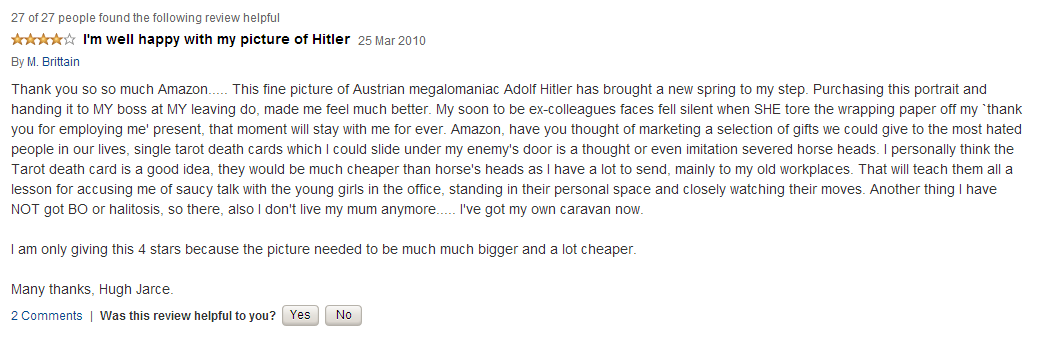
    Box Canvas Print of ADOLF HITLER/IN 1939 from Mary Evans
    Box Canvas Print of ADOLF HITLER/IN 1939 from Mary Evans
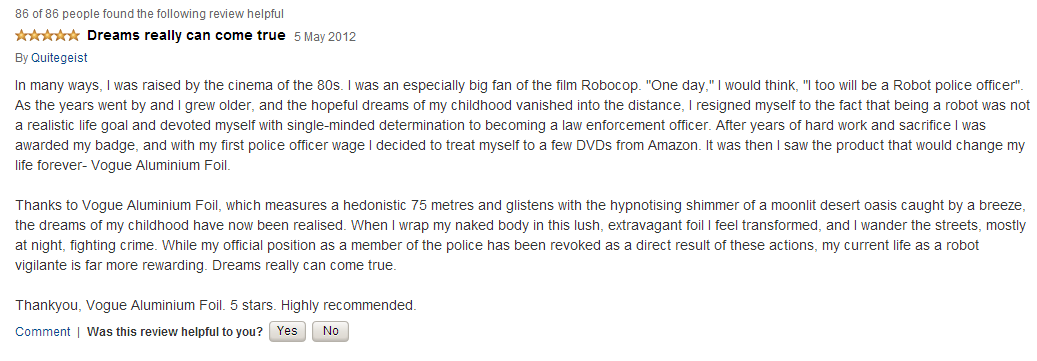
    Aluminium Foil 18" (450mm x 75m) - industrial size for your kitchen or professional establishment
    Aluminium Foil 18″ (450mm x 75m) – industrial size for your kitchen or professional establishment
  • The origins of Search Engine Optimisation (SEO)

    I’ve been working with websites since before search engine optimisation (SEO) was a ‘thing’. I originally taught myself HTML as a young teenager using a book I found lying about by Carol Vordernman and the rest, as they say, for me at least, is history. I’ve been providing SEO in Sheffield & further afield now for many years. The first of the more sophisticated search engines to start ‘crawling’ the web and using ‘back-links’ to help evaluate a website was BackRub (later Google) back in 1996. It ranked pages using citation notation, meaning any mention of a website on another site would count it as a kind of vote toward the site it pointed to. In other words, basic things like how many links and the quality of those links to a site would improve its ranking and thus the search engine optimisation industry was born.

    Sheffield SEO (Search Engine optimisation)
    Sheffield SEO (Search Engine optimisation)

    It was very easy to manipulate search engines in the early days

    Back in those early halcyon days, the world wide web was not widely understood and search engines were very easy to manipulate. As businesses began to see the potential of the internet, ‘experts’ appeared who promised to get them ‘up the rankings’. It was actually very easy to do using techniques such as keyword stuffing (for example, a hundred instances of a phrase, right at the bottom of a website, in white writing and on a white background or hiding keywords in the source code) and it actually worked! This, in conjunction with very little search engine competition, created a very profitable business for many SEOs. However, this situation meant that a poor quality site could often easily rank better than a good quality sites – and Google certainly didn’t like being manipulated. Google therefore developed & improved their search algorithm to spot ‘keyword stuffed’ sites and the big change came when they released the infamous Penguin update in 2012 – overnight, many poor quality and keyword stuffed websites dropped out of the search results.

    The new Penguin rules were:

    • Show all of your content.
    • Never stuff keywords in your text or in your images’ ‘alt text’.
    • Don’t use lists of keywords to promote your content.

    If you’re interested in a bit the internet history, you click here to read the official Google Webmaster Blog post entitled ‘Another step to reward high-quality sites’ from 24th April 2012

    SEO in 2020

    Roll on to 2020, and although SEO or search engine optimisation is still a thing, it’s actually almost unrecognisable compared to what it was in those early days. Nowadays we need to focus on providing value to the audience. This, in theory anyway, means that the audience will engage with it and the ‘signals’ (such as social shares, time spent on a site, inbound links) will naturally happen. These signals are what Google use to decide where your site should rank.

    Here is a list of good SEO practice from Google’s perspective in 2020:

    • Help Google find your content
    • Tell Google which pages shouldn’t be crawled
    • Help Google (and users) understand your content
    • Manage your appearance in Google Search results
    • Organise your site hierarchy
    • Optimise your content
    • Optimise your images
    • Make your site mobile-friendly
    • ‘Promote your website’
    • Analyse your search performance and user behaviour

    I’m not going to go into detail here about exactly what these ‘guidelines’ mean as each one warrants its own 1000 word article, however, the rules basically mean that you (as a site owner) and Google (as a search engine) need to meet in the middle. Google does as much as it can to ‘understand’ your site and you need to do as much as you can to help Google ‘understood’ your site.

    However, it all becomes a lot easier to understand when you consider the following facts:

    • Google is first and foremost an advertising agency
    • In order to remain as profitable as possible, Google need to provide the best value to it’s customers (the advertisers) by providing the biggest and most relevant audience (allowing more targeted ads which improves the ROI)
    • Google’s value therefore is in the audience it provides for its advertisers
    • The audience will naturally gravitate to the best search engine experience which includes:
      • High quality
      • Relevant
      • Fast
      • Trustworthy
      • Choice

    Therefore, the better your experience, the more likely you are to use their services.

    The only company who would be potentially able to do this better that Google is Facebook. However, the reason Facebook currently can’t compete is:

    • We don’t trust them anymore. The Cambridge Analytica scandal had a lot to do with this. Their app is also far too intrusive. For example, if you have a recent Android phone, have you tried removing or even disabling the Facebook app that comes pre-installed?
    • Their results aren’t always relevant or high-quality. The content is user-generated or created by advertisers so there often simply isn’t enough choice, quality or relevance

    More importantly than that, though, is that many of us can live quite happily without Facebook but how many of us can cope without a search engine?

    Improve your search engine rankings

    Google is a fact of life but your website languishing on page 4 isn’t. You’ve seen that good search engine optimsation is no longer ‘smoke and mirrors’, rather it’s a combination of providing quality to your audience and communicating effectively with Google. Time-consuming maybe but certainly not rocket-science (or should that be ‘rocket-surgery’?) If you’d like to know where your site can be improved, give us a call on 0114 383 0711   


  • How to reactivate the WordPress Links Manager

    If like me you’ve been using WordPress since the beginning – or at least prior to December 2012, you might remember the old WordPress Links Manager (sometimes also known as Blogroll). However, this functionality was removed by default from WordPress version 3.5 onward. Yes, on the one-hand, links like that are a bit old-fashioned, however, there are occasions when it does come in very useful.

    The links manager will allow you to easily create and manage links on your site that are (normally) simply added to the sidebar using a widget.

    This functionality is still available within he core WordPress functionality, it’s just turned off now. However, it is pretty easy to ‘turn it back on again’, and here’s how.

    How to re-activate or add the WordPress Links Manager to your site

    Firstly, you need to access your theme ‘functions.php’ file. The easiest way to do this is through the site’s in-built ‘theme editor’. Find this file for your current live WordPress theme and open the file for editing. If this ‘theme edit’ option isn’t available, try accessing the file via FTP (it’s in the theme files)

    Secondly, add the following line of code to the file and save:

    add_filter( 'pre_option_link_manager_enabled', '__return_true' );

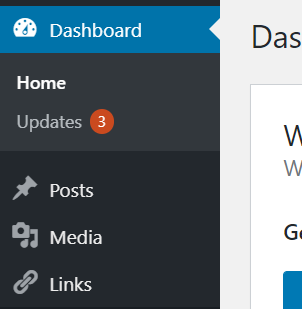
    Now head back to your dashboard and you should now find ‘Links’ (the old ‘links manager’) as an option under the ‘Media’ option.

    Still unable to activate the WordPress Links Manager?

    If you need help with your WordPress site including WordPress hosting and WordPress maintenance, give us a call on 0114 383 0711