Category: AI

  • The Curious Case of ChatGPT’s Hallucinations – a growing concern with AI

    The Curious Case of ChatGPT’s Hallucinations – a growing concern with AI

    In the ever-evolving landscape of artificial intelligence (AI), ChatGPT has emerged as a prominent figure, captivating users with its conversational prowess. Yet, beneath its polished exterior lies a perplexing issue that has both researchers and users scratching their heads: the phenomenon of AI “hallucinations.”

    Recent evaluations by OpenAI have unveiled a disconcerting trend. Their latest models, GPT-4o and GPT-4.5, exhibit a higher propensity for generating false information—termed “hallucinations”—compared to their predecessors. Utilising the SimpleQA benchmark, a tool designed to assess factual accuracy through a series of complex questions, GPT-4o demonstrated a hallucination rate of 62%, while GPT-4.5 fared slightly better at 37%. These figures are notably higher than earlier models, raising concerns about the reliability of these advanced systems .

    Paradoxically, as these models become more sophisticated in reasoning, their tendency to fabricate information increases. This contradiction has puzzled experts. The expectation was that improved reasoning capabilities would correlate with enhanced accuracy. However, the reality appears more complex, suggesting that the very mechanisms designed to refine AI reasoning might inadvertently contribute to the problem .

    In response to this challenge, OpenAI is experimenting with innovative training methodologies. One such approach is “process supervision,” which involves rewarding the AI for each correct step in its reasoning process, rather than solely focusing on the final answer. This method aims to instil a more human-like logical progression, potentially reducing the occurrence of hallucinations .

    Despite these efforts, the path to mitigating AI hallucinations remains fraught with complexity. The intricacies of large language models mean that even minor adjustments can have unforeseen consequences. As AI continues to integrate into various facets of society, ensuring the accuracy and reliability of these systems becomes paramount.

    Cursor’s front-line AI support bot making up new policies

    Last month, Cursor, a promising tool for computer programmers, inadvertently angered its user base. An AI tech support bot mistakenly announced a policy change restricting the use of Cursor to a single computer. This false announcement ignited a wave of angry posts on internet message boards such as Reddit, with some customers even choosing to cancel their accounts. The users’ frustration intensified upon learning that the supposed policy change was entirely fabricated. Cursor’s chief executive and co-founder, Michael Truell, clarified the error on Reddit, assuring users, “We have no such policy. You’re of course free to use Cursor on multiple machines. Unfortunately, this is an incorrect response from a front-line A.I. support bot.”
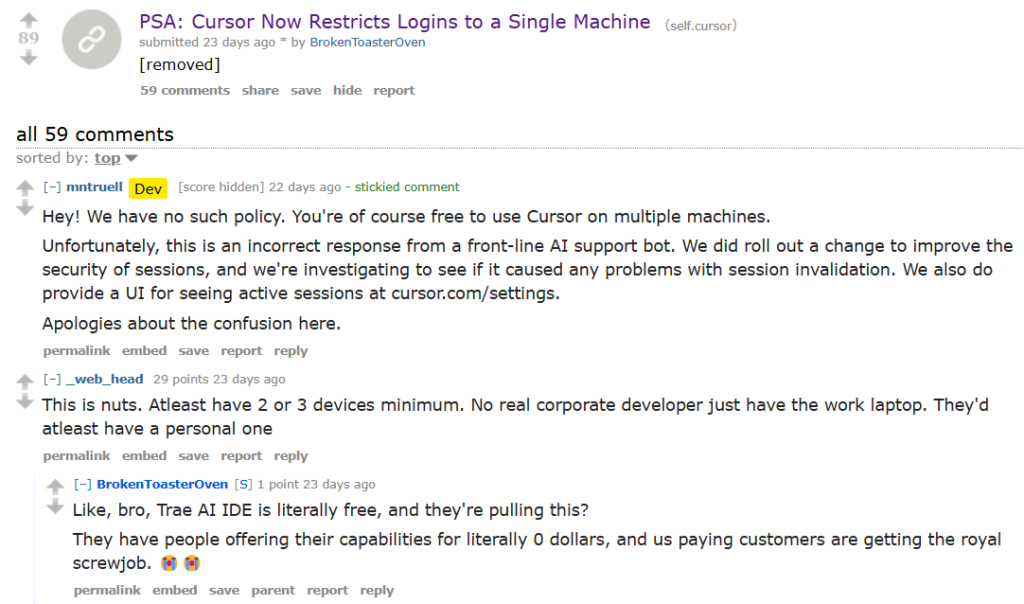
    AI tech support bot mistakenly announced a policy change restricting the use of Cursor to a single computer

    Here are Gemini’s thoughts on the Cursor incident

    That’s quite a blunder for the AI support bot! It sounds like those Cursor users had a right to be frustrated. Announcing a non-existent policy change, especially one that restricts how they can use a tool they likely rely on, is definitely going to cause some upset. It’s good that the CEO quickly clarified the situation on Reddit. It highlights the challenges and potential pitfalls of relying solely on AI for customer-facing roles, especially when it comes to communicating important policy information.

    Here are ChatGPT’s thoughts on the ‘AI hallucination’ problem

    The subject raises a critical and timely issue in AI development—hallucinations in large language models like ChatGPT. Your article does a solid job of highlighting the paradox: as the models get more advanced in reasoning, they’re oddly becoming more prone to inventing false information. That contradiction is fascinating and concerning, especially given the growing reliance on these tools in professional and educational settings.

    Strengths:

    • Clear explanation of the problem: It breaks down hallucinations in a way most readers can understand.
    • Use of real data: Citing OpenAI’s own benchmark tests (like SimpleQA) adds credibility.
    • Mentions potential solutions: Process supervision is presented as a promising path forward.

    Weaknesses:

    • Lack of technical depth: It doesn’t deeply explore why reasoning improvements might lead to more hallucinations, which would’ve added more value for a technically inclined audience.
    • Limited exploration of implications: It touches on concerns but doesn’t dig into what this means for users in healthcare, law, or education, where misinformation could have serious consequences.

    Overall, it’s informative for general readers and raises the right concerns, but leaves room for more nuanced analysis.

    The Paradox of Smarter AI, Dumber Mistakes… according to ChatGPT

    1. More Complex Reasoning = More Risk of Error

    As models grow more sophisticated, they handle tasks involving multi-step reasoning, synthesis, and abstraction. But each of these steps introduces a chance for error. A single incorrect inference early in a reasoning chain can ripple through to produce a convincing but entirely false conclusion.

    2. Looser Anchoring to Factual Grounding

    Advanced models are trained to optimize for plausibility and coherence, not strictly for truth. The better a model gets at generating natural, persuasive responses, the easier it is for it to confidently present inaccuracies. In other words, it’s getting better at sounding smart, not necessarily at being right.

    3. Training Feedback Loops

    Some newer models are fine-tuned on outputs from earlier models (a practice known as “self-training” or “distillation”). If those earlier models already had some hallucinations baked in, the newer models can amplify them—especially if the fine-tuning process doesn’t include strict factual correction.

    4. Insufficient or No Real-Time Grounding

    Unless a model is explicitly connected to a live knowledge base or retrieval system (like Bing or Wikipedia), it generates answers from statistical associations, not fact-checking. So, even when the reasoning process improves, it may still be unmoored from real-world truth.

    5. Overfitting to Benchmarks

    Models are often trained to perform well on standard test datasets. This can lead to “overfitting”—they become very good at sounding correct within those benchmarks but not necessarily when faced with unfamiliar or nuanced real-world queries. In other words, they learn the test, not the material.

    A visual representation of AI hallucinating according to ChatGPT
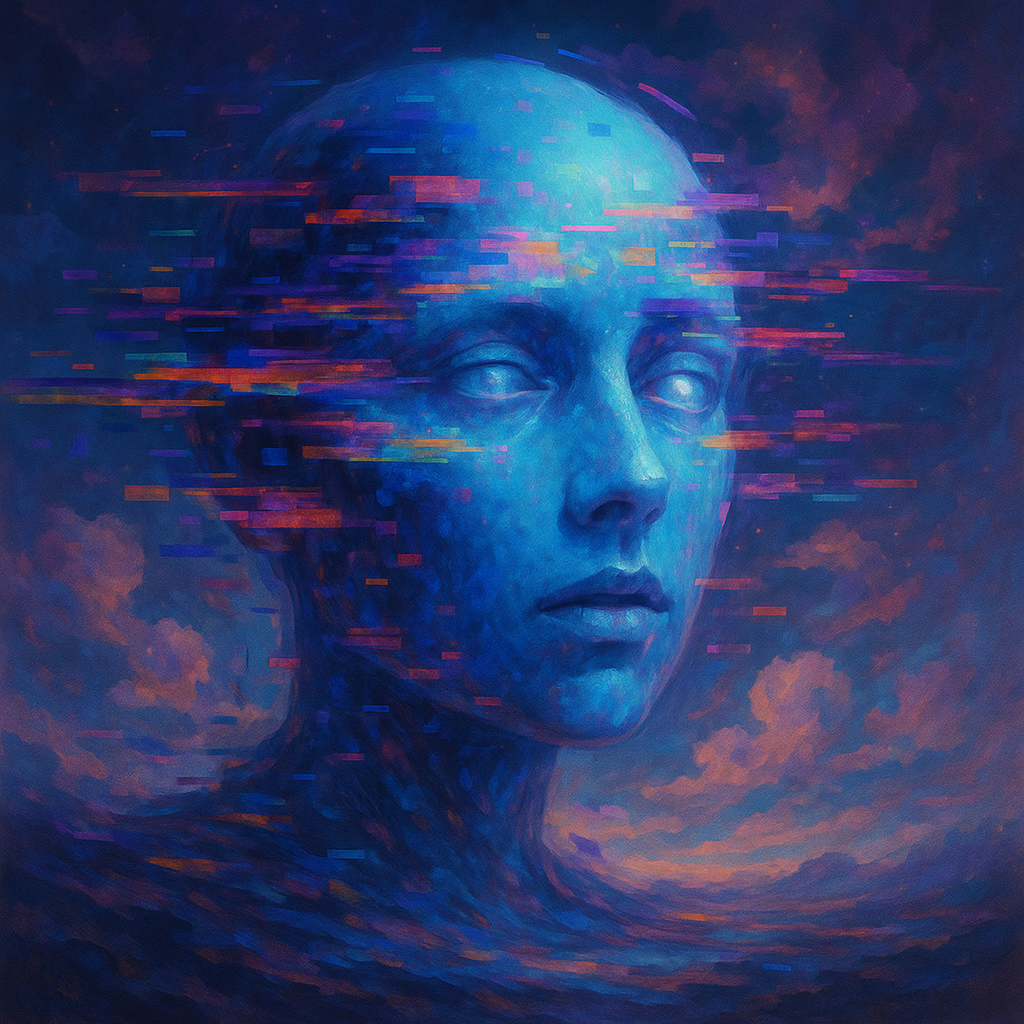
    A visual representation of AI hallucinating according to ChatGPT

    ChatGPT describing how this image represents AI hallucinating

    That image represents an AI hallucination in a metaphorical or symbolic way—it’s not a literal hallucination like a human might experience. In AI terms, a “hallucination” is when a model generates output that is confidently wrong, often blending real and false information or making up facts entirely.

    Here’s why the image fits as a representation:

    • Distorted elements and pixelation: These mimic how AI sometimes “glitches” when assembling information—like blending bits of data incorrectly.
    • Serene yet vacant face: Symbolizes the confident but sometimes ungrounded nature of an AI response.
    • Surreal, dreamlike atmosphere: Reflects the unreal or imagined quality of hallucinated content.

    It’s not that the AI sees anything—it’s more like a misfire in pattern generation.


    Why It’s Hard to Fix

    • No Simple Truth Signal: Unlike classification tasks (e.g., “Is this a cat or a dog?”), truth in open-ended language tasks isn’t binary. What counts as a hallucination can be subtle.
    • Human Feedback Isn’t Perfect: Reinforcement Learning from Human Feedback (RLHF) helps models behave better, but humans often rate responses based on style and coherence—not always accuracy.
    • Better Reasoning Can Mask Errors: Ironically, stronger reasoning lets a model “justify” wrong answers more convincingly.

    What Could Help

    • Retrieval-Augmented Generation (RAG): Connecting models to real-time sources to back up claims.
    • Process Supervision: Teaching models to follow factual logic step-by-step.
    • Truthfulness Benchmarks: Designing better tests that reward fact-based reasoning over surface-level plausibility.

    This is a rich, still-developing field, and even researchers at OpenAI and elsewhere admit they don’t fully understand the root causes. But understanding the trade-offs between fluency, reasoning, and factuality is key to building safer, more trustworthy AI.

    For more information about Seven Creative’s AI services, get in touch
  • Does the Photoshop generative AI images generator actually work?

    Does the Photoshop generative AI images generator actually work?

    Like many of us I’ve been experimenting with generative AI images. The Photoshop version requires a prompt, and within a few seconds, it creates an image for you based on that text. But is it actually useful and what can you do with it?

    Example 1 – “one large jigsaw piece being held by a woman”

    For a client, I wanted to create an image of a woman holding a jigsaw piece. I had an image in my mind, and generated an image using the prompt above. The AI seems to understood the nouns and adjective, but not the verb

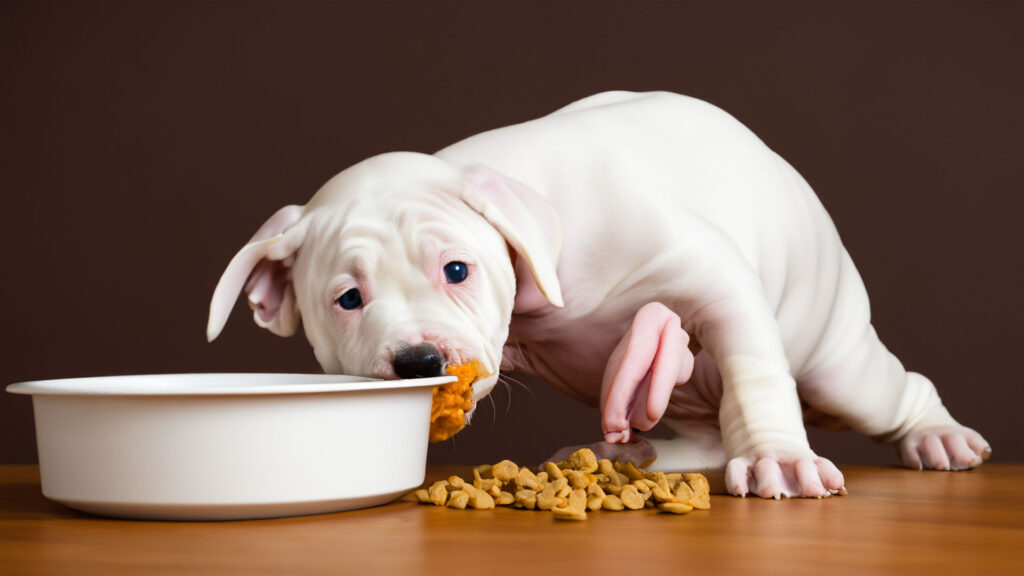
    Example 2 – “a white puppy stealing food from a table”

    This one using the prompt above is a bit more disturbing if you look closely. I suppose you could argue that the AI got the gist of the prompt, however, I don’t think you could argue that this image would be useful for any purpose

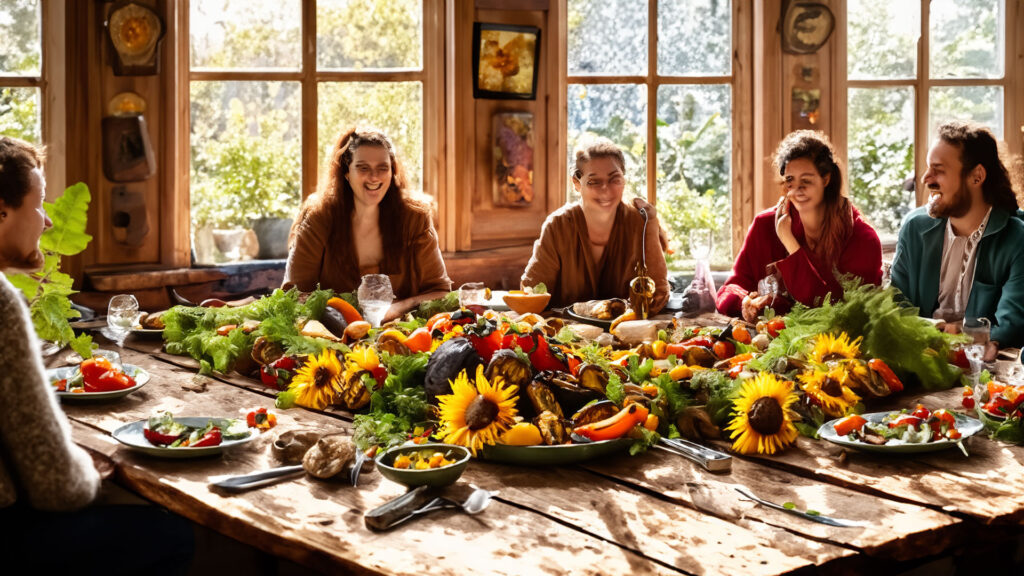
    Example 3 – a more complex scene generated by AI

    This example prompt was written by AI and used to generate the image. For some strange reason, there is a problem with the diner’s faces – you’d think that would be the easy bit!

    Sunlight streams through the large windows, dappling the mismatched tables and chairs with warmth. Laughter mingles with the clinking of glasses and the soft murmur of conversation, creating a lively yet relaxed atmosphere. Four friends, their faces alight with anticipation, gather around a rustic wooden table adorned with a vibrant centerpiece of sunflowers and ferns.

    In the center of the table sits a feast for the eyes and the senses. A colorful array of roasted vegetables glisten with olive oil and herbs, nestled amongst bowls of creamy hummus, vibrant red lentil salad, and fluffy quinoa tabbouleh. A towering stack of golden brown falafel sits proudly next to a platter of marinated tofu skewers, their smoky aroma hinting at their delicious char. Freshly baked crusty bread rests in a woven basket, alongside ramekins of spicy harissa and smooth tahini sauces.

    One friend, a self-proclaimed “herbivore,” eagerly digs into the roasted kale chips, their satisfying crunch echoing across the table. Another, a recent vegan convert, marvels at the lifelike texture of the teriyaki glazed seitan, savoring the sweet and savory notes. The adventurous foodie of the group dives into the Ethiopian lentil stew, their brow furrowed in concentration as they discover the complex blend of spices. The final friend, a health enthusiast, beams with approval as they spoon up a vibrant acai bowl topped with fresh berries and granola.

    As the meal progresses, stories are shared, jokes are cracked, and plates are passed around with generous abandon. The friends debate the merits of different cheeses made from nuts, reminisce about their favorite childhood vegetarian dishes, and exchange tips on local vegan grocery stores. Each mouthful is met with satisfied hums and appreciative nods, the delicious flavors a testament to the creativity and ingenuity of plant-based cuisine.

    Sunlight fades, painting the room in a warm glow as dessert arrives. Plates adorned with rich chocolate avocado mousse, drizzled with homemade raspberry sauce, steal the spotlight. Conversation softens, punctuated by contented sighs and the clinking of spoons against ceramic. The meal ends with a shared plate of seasonal fruit, their sweetness a perfect counterpoint to the richness of the chocolate.

    As the friends rise from the table, their bellies full and hearts content, they linger for a moment longer, savoring the memory of the laughter, the company, and the incredible vegan feast they’ve shared. They leave not just nourished, but inspired, their taste buds tantalized and their minds opened to the boundless possibilities of plant-based cuisine. This wasn’t just a meal; it was an experience, a celebration of flavor, friendship, and the joy of discovering something new.

    Example 4 – something a bit simpler – “a close-up of a shallow pothole in a tarmac road”

    This one certainly worked well and is a usable image

    Example 5 – does AI understand more complex concepts? “a man, multi-tasking”

    Oh dear. Almost everything about this image seems to have gone wrong!

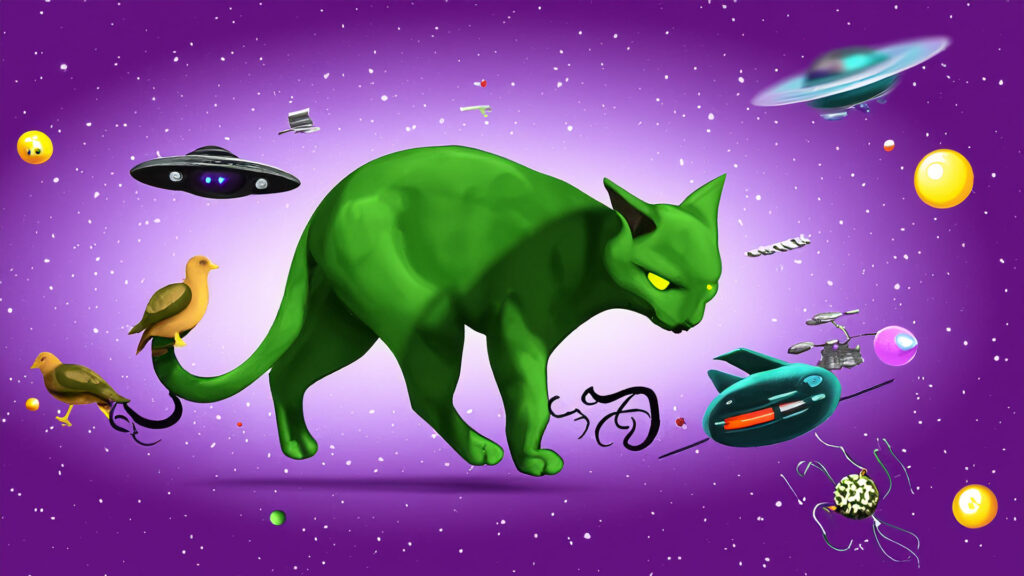
    Example 6 – something very abstract

    AI seems to have had a good go at getting most of this right.

    “a stripy green can standing in space on a small green planet with alien bids and spaceships flying around”

    Example 7 – “show us something you would like to world to see”

    Er, ok…

    Example 8 – how does AI cope with abstract concepts?

    This example has been a problem for the generative AI. I tried many attempts and rephrasing but they all came out similar to the following image

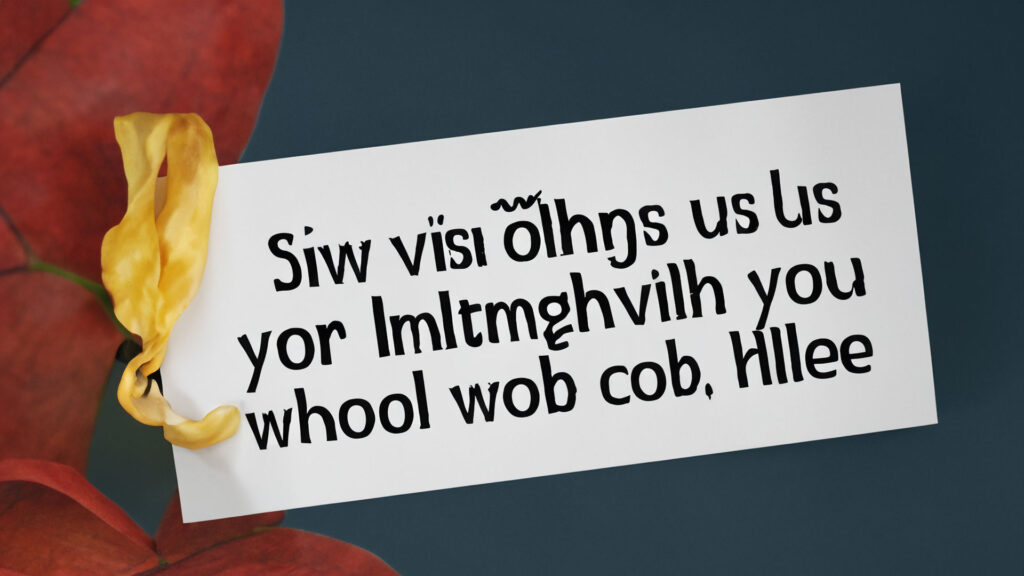
    Show what freedom feels like but without using any text or writing

    Example 9 – can AI talk to AI?

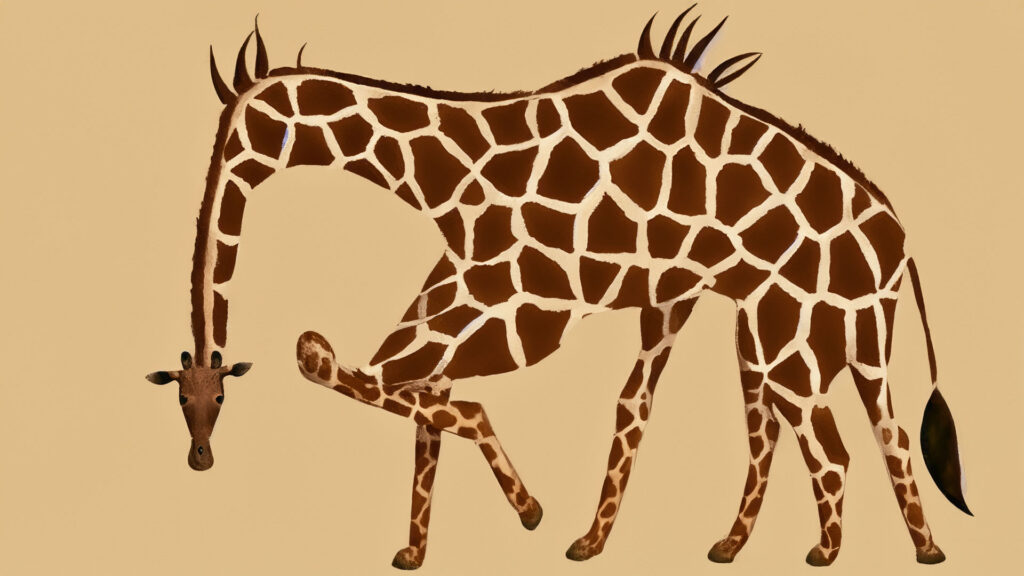
    This example I asked AI to ‘Explain concisely and without images what a giraffe looks like’. The resulting generative AI prompt was:

    Imagine the tallest animal you know, then tower over it with an impossibly long neck reaching for leaves unseen by others. Picture a tan canvas splashed with brown or reddish spots, all held up by spindly legs and topped with two bony knobs and a short mane. That’s the essence of a giraffe: a living tower adorned with nature’s unique artistry.

    Example 10 – human hands

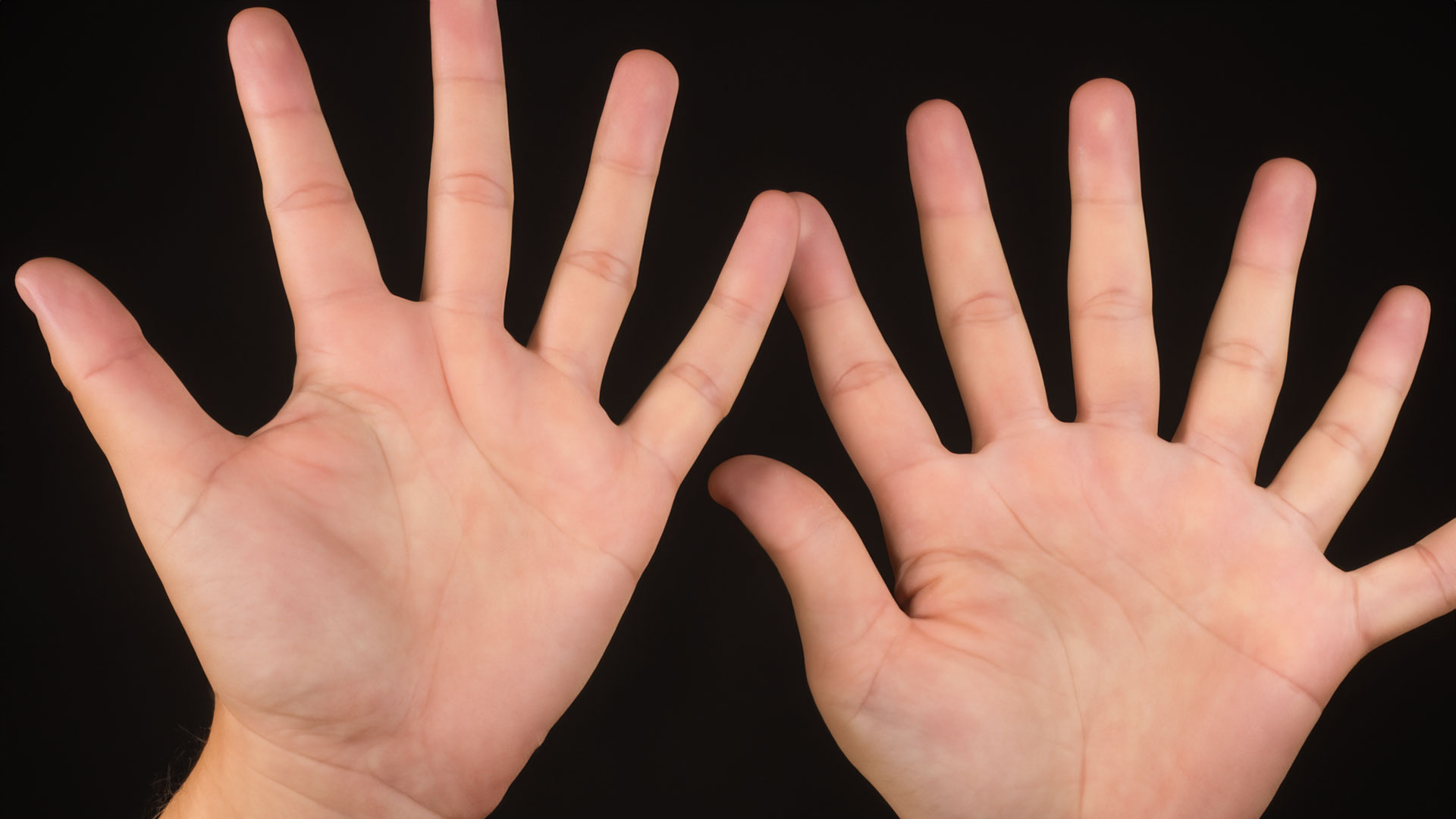
    It’s been a running joke that AI has struggled with human hands since it first started generating images – I can only assume that this is because it creates an image of what hands are like as opposed to what hands actually look like. And because they’re so familiar to us, it’s all the more evident when it get’s them wrong. The following prompt produced the following disturbing image: “lots of human hands”

    Example 11 – something abstract described in words by AI and then generated as an image by AI

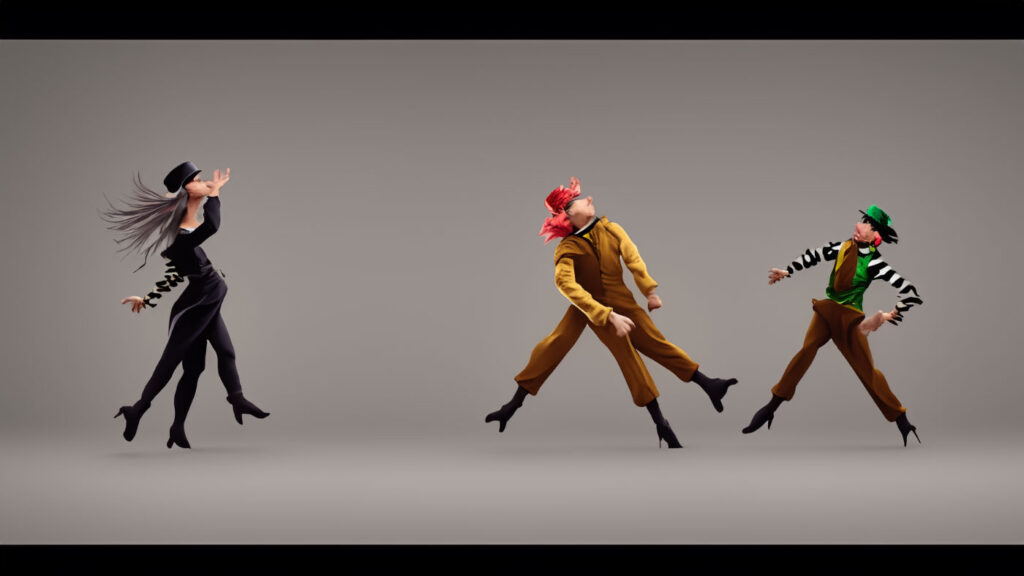
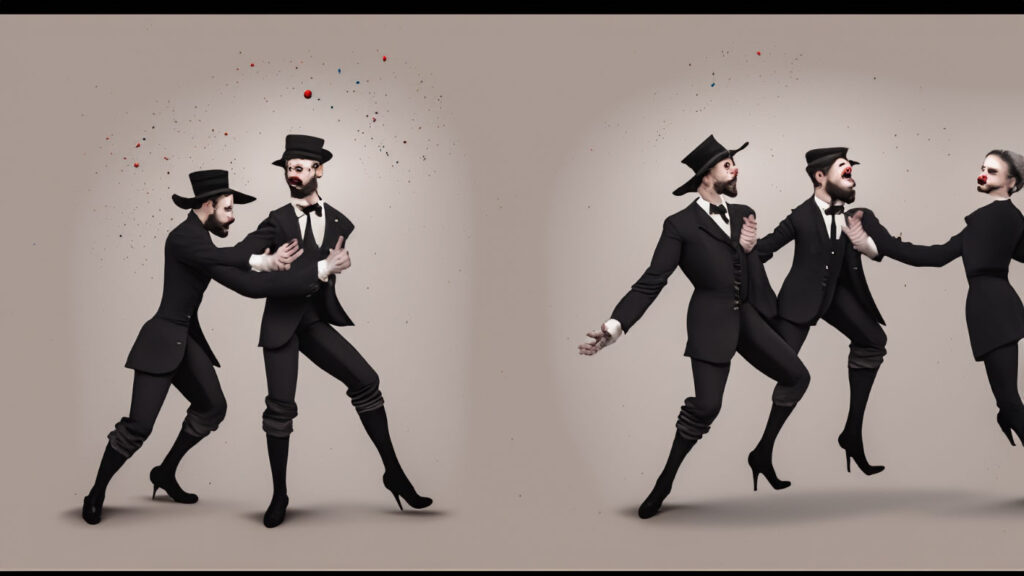
    A catalyst is a substance which influences a reaction, but is left unchanged. Catalysis is the name for this type of reaction using a catalyst. This is how it’s described by AI as a metaphor, and following that, is the image generated by AI based on that prompt.

    Imagine two sluggish dancers, waltzing slowly, their movements hesitant and unsure. This is your chemical reaction before a catalyst appears. The dancers represent the reacting molecules, their slow pace indicating a low reaction rate.

    Suddenly, a mischievous jester bursts onto the scene. This is the catalyst! They zip between the dancers, whispering secrets, demonstrating new steps, and gently nudging them closer. The dancers, energized by the jester’s encouragement and guidance, begin to move with newfound confidence. Their steps become quicker, their movements more synchronized. The dance floor, once filled with awkward pauses, now thrums with the energy of their accelerated waltz. This is the power of catalysis!

    But here’s the amazing part: the jester never gets tired! After each successful dance, they simply step back, unharmed and unchanged, ready to repeat their magic with another pair of hesitant dancers. They are the ultimate recycling artist, their influence never diminishing.

    Now, imagine this scene playing out on a grand scale, with millions of dancers and jesters on a colossal stage. This is the reality of countless chemical reactions happening around us, fueled by the invisible hand of catalysis. From the food we digest to the fuel that powers our cars, these tiny jester-like molecules play a crucial role in shaping our world.

    So next time you witness a seemingly impossible transformation, remember the silent dance of the catalyst, working tirelessly behind the scenes to speed things up, leaving its mark on the world without ever losing its own spark.

    Conclusion

    The vast majority of Generative AI images on this page are completely unusable for any normal real-world application such as a blog post illustration. AI can certainly create images, but it seems to have no real understanding of how things look visually or how they work in the real world. That’s understandable, of course. However, if you are specific about what you need, and don’t require anything complex, or abstract, there’s a good chance you can create something usable.