Manufacturing environments and industrial facilities operate on fine margins where operational efficiency, safety compliance, and facility uptime directly dictate commercial success. Managing a complex industrial site—whether an advanced manufacturing plant, a chemical processing facility, a food production factory, or a logistics distribution center—requires detailed spatial understanding. Yet, for decades, operations leads, EHS (Environmental, Health, and Safety) managers, and plant engineers have relied on static 2D floor plans, outdated CAD drawings, and time-consuming in-person site walk-throughs to make critical decisions.
This reliance on legacy site management creates operational friction. Coordinating physical site visits for corporate executives, third-party auditors, equipment vendors, and engineering contractors takes valuable time, increases administrative overhead, and risks interrupting active production lines. When modifications are planned, missing or inaccurate spatial dimensions can lead to expensive site clashes during equipment installation, extended maintenance shutdowns, and safety oversights.
Inside the Factory (insidethefactory.co.uk) bridges the gap between physical industrial assets and digital management systems. By deploying high-precision Matterport 3D capture technology, LiDAR spatial scanning, and tailored visual data solutions, Inside the Factory creates immersive, dimensionally accurate digital twins of industrial facilities.
At Seven Creative, we build the digital infrastructure that fuels business growth. In this deep dive, we examine how Inside the Factory is revolutionizing industrial facilities management, plant safety, contractor onboarding, and capital expenditure planning through industrial 3D digital twins.
1. What Is an Industrial Digital Twin?
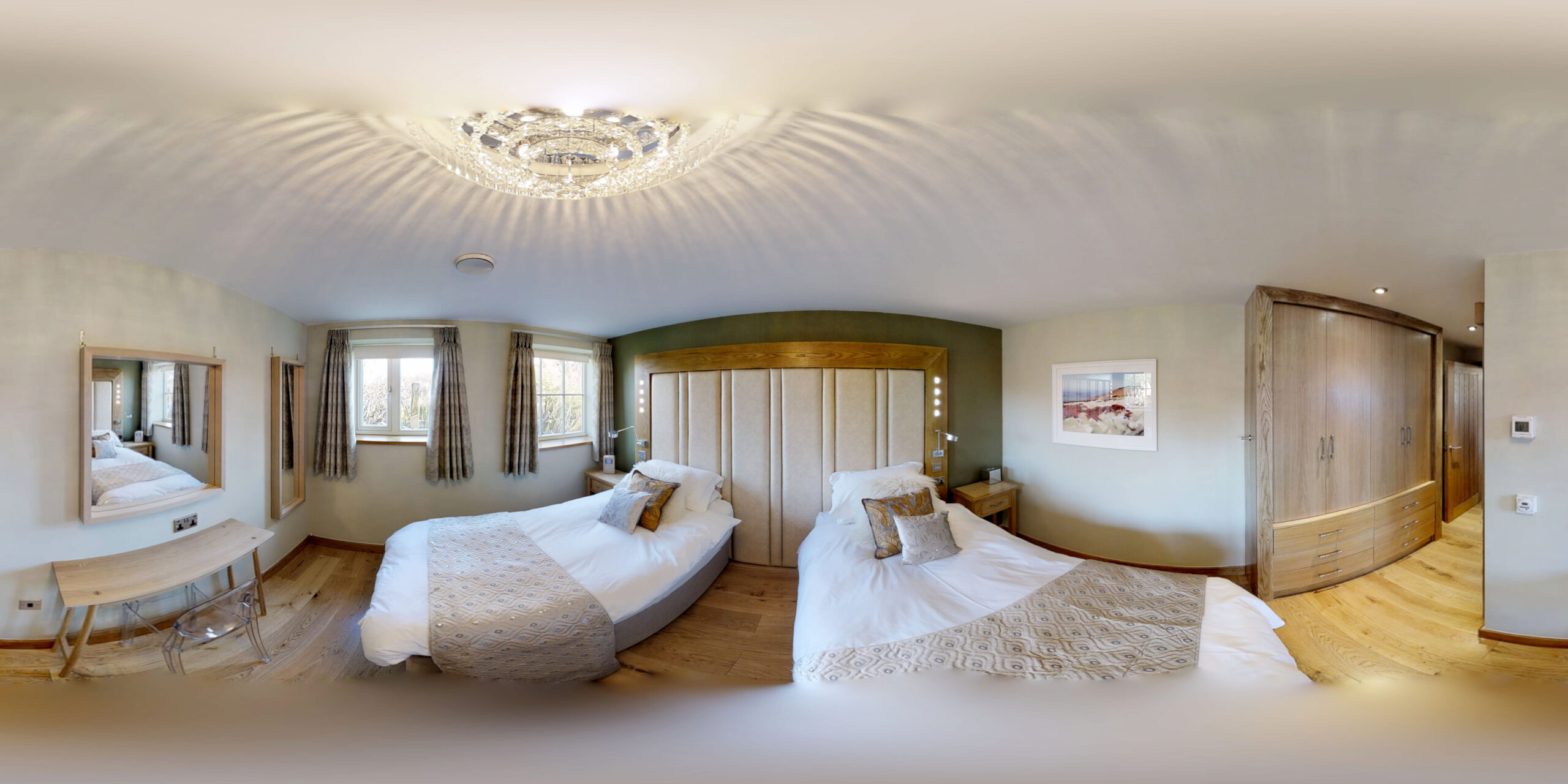
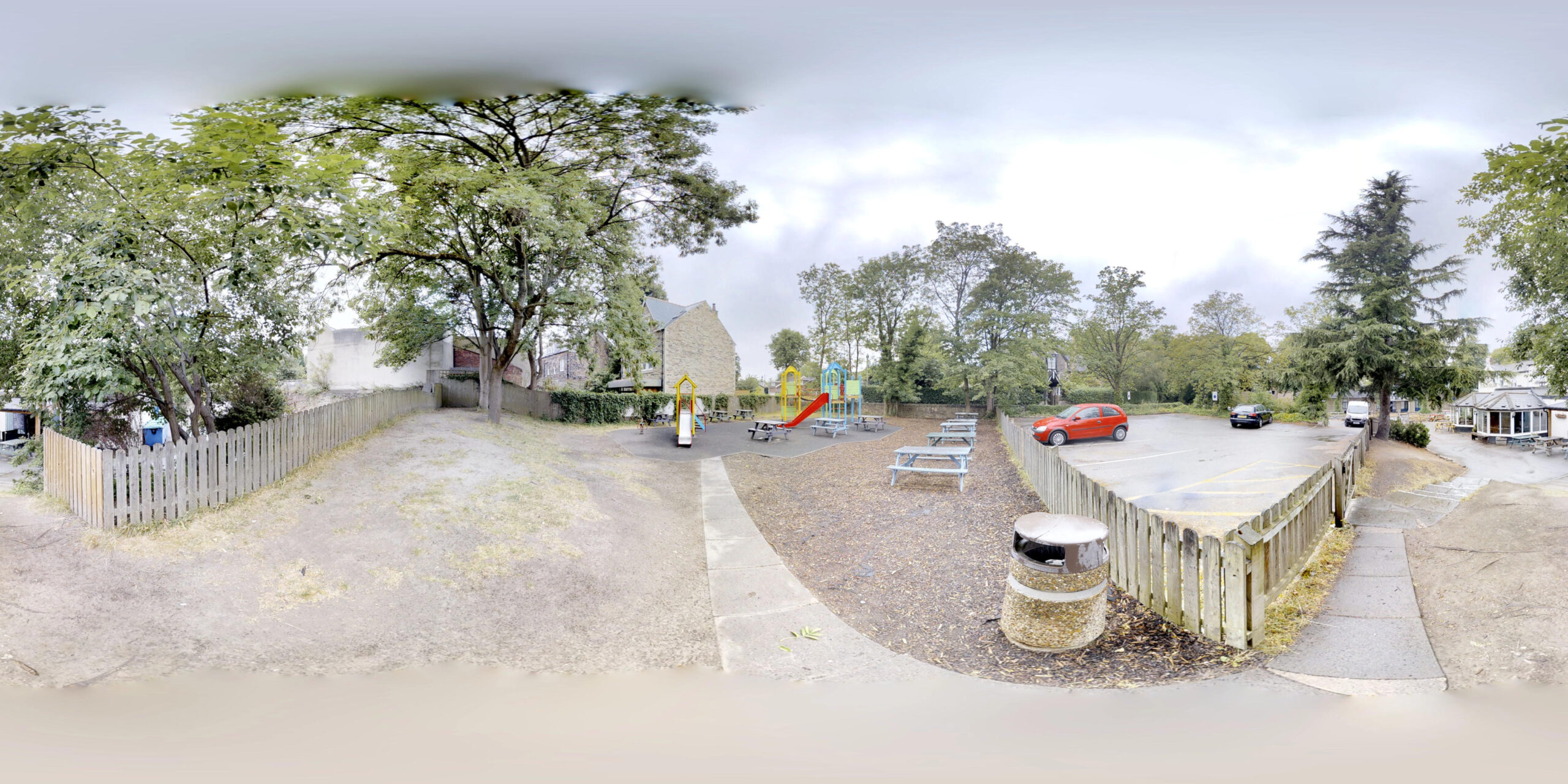
An industrial digital twin is a high-resolution, dimensionally accurate, 3D visual replica of a physical facility. Unlike static 2D floor plans or 360-degree virtual photography tours, an industrial digital twin constructed via Matterport Pro3 LiDAR technology combines true spatial depth, photorealistic visual imagery, and interactive data layers.
When an industrial site is digitized by Inside the Factory, the resulting model acts as a single, accessible source of truth for every department in the business. Stakeholders can navigate the facility from a web browser, measure clearances down to the millimetre, tag machinery with operational documentation, and conduct virtual walkthroughs without ever putting on a high-visibility vest or stepping onto a noisy factory floor.
The Evolution from Photogrammetry to LiDAR Accuracy
Early attempts at digital factory modeling relied on standard photogrammetry, which often failed in industrial spaces due to complex pipework, reflective metallic surfaces, and high-ceiling structures. The adoption of laser-based LiDAR scanning—such as the Matterport Pro3 system—changed the equation.
LiDAR active sensors emit millions of laser pulses per second, measuring spatial depth with extreme accuracy up to 100 metres away, even in direct sunlight or dim indoor plant environments. This spatial accuracy transforms a virtual tour from a simple marketing asset into a reliable engineering tool.
2. Core Operational Use Cases for 3D Factory Scanning
Deploying 3D digital twins across manufacturing plants and warehouse operations delivers measurable returns across six distinct operational domains:
A. Remote Site Auditing and Regulatory Compliance
Industrial facilities are subjected to strict regulatory oversights, including ISO standards, health and safety inspections, environmental audits, and insurance evaluations. Traditional audits require scheduling auditors to be physically present on-site, managing security clearances, arranging safety escorts, and coordinating around shift patterns.
Inside the Factory enables remote, desktop-based site auditing. Auditors can walk through the facility virtually, inspect machine guarding, verify fire exit access routes, evaluate eye-wash station positioning, and review floor marking compliance.
- Reduced Audit Preparation Time: External inspectors can conduct pre-audit reviews via the digital twin, reserving on-site time exclusively for physical verifications.
- Historical Compliance Records: Time-stamped 3D scans provide an indisputable record of physical site conditions at any given moment, establishing audit trails for insurance and compliance boards.
- Cross-Site Benchmarking: Corporate EHS teams managing multiple facilities across the UK and Europe can benchmark safety standards across sites without traveling between locations.
B. Environmental, Health, and Safety (EHS) Training
Onboarding new plant operators, shift workers, and temporary staff presents inherent safety risks. Introducing uninitiated workers directly onto an active factory floor can disrupt production and increase workplace injury risks.
With an industrial digital twin generated by Inside the Factory, EHS managers can build interactive, immersive safety training modules:
- Virtual Site Inductions: New hires complete initial walkthroughs virtually, familiarizing themselves with emergency egress routes, assembly points, first aid stations, and Lockout/Tagout (LOTO) points prior to their first physical shift.
- Interactive Hazard Identification: Safety managers embed interactive “Mattertag” multimedia markers directly at hazardous zones, machine pinch points, chemical storage areas, and high-voltage panels.
- Standard Operating Procedure (SOP) Integration: Link physical machinery in the 3D model directly to video SOPs, PDF equipment manuals, and digital sign-off forms.
C. Streamlined Equipment Maintenance and Asset Management
In high-throughput industrial environments, unplanned downtime is exceptionally costly. Maintenance technicians often waste time searching for specific valves, electrical panels, or utility drop points spread across massive facility footprints.
By integrating 3D visual data into Computerized Maintenance Management Systems (CMMS) or Enterprise Asset Management (EAM) platforms, Inside the Factory simplifies asset localization:
- Asset Tagging: Maintenance teams tag physical equipment inside the model with asset IDs, serial numbers, operational manuals, and part replacement schedules.
- Pre-Task Briefings: Technicians inspect the physical workspace around a broken machine virtually to plan rigging access, scaffold placement, and staging areas before stepping onto the floor.
- Utility Line Mapping: Map out air lines, cooling water, gas lines, and high-voltage power conduits directly on the model so contractors know precisely where isolation valves are located.
D. Vendor and Contractor Management
Bringing outside contractors, original equipment manufacturers (OEMs), and specialized engineers on-site for maintenance or facility upgrades requires extensive coordination. Outside vendors routinely charge high fees for pre-bid site visits, site measurements, and travel time.
Providing third-party vendors with secure access to an Inside the Factory digital twin fundamentally changes procurement workflows. Contractors can take digital measurements directly within the browser interface, evaluate overhead clearances, verify doorway dimensions for heavy equipment movement, and bid accurately without travel fees.
E. Facility Reconfiguration and Space Planning
Manufacturing demands change rapidly. Whether introducing a new production line, optimizing warehouse pallet racking, or reconfiguring a packaging cell for Lean/5S workflows, space planning requires precise spatial inputs.
Using the measurement tools embedded within Inside the Factory’s Matterport 3D digital twins, plant layout teams can:
- Verify Forklift Turning Radii: Ensure proposed aisle widths accommodate material handling equipment safely.
- Test Utility Drop Clearance: Confirm that overhead power, compressed air, and ventilation ducts match proposed machine heights.
- Optimize Material Flow: Analyze the physical distance between raw material intake, work-in-progress (WIP) storage, and final packing lines to reduce unnecessary travel time.
F. CapEx Planning, Point Cloud Exports, and Scan to BIM
For major capital expenditure (CapEx) facility upgrades, plant extensions, or retrofits, architectural and engineering teams require CAD and BIM (Building Information Modeling) compatibility.
Inside the Factory delivers high-density technical exports alongside hosted 3D walkthroughs:
| Deliverable File Type |
Technical Specification |
Primary Engineering / Architectural Use |
| E57 Point Cloud |
High-density 3D spatial coordinate file containing X, Y, Z coordinates and RGB color data. |
Imported into Autodesk Revit, AutoCAD, or Leica Cyclone for detailed structural clash detection and as-built modeling. |
| MatterPak (.XYZ / .OBJ) |
Structured spatial data package including 3D mesh files and color point clouds. |
Rapid initial spatial layouts, 3D surface modeling, and preliminary engineering proposals. |
| Schematic Floor Plans |
Professional 2D black-and-white vector plans with dimensions and square footage. |
Facilities management reference drawings, emergency exit signage, and space allocation planning. |
| High-Res Floor Images |
Scaled orthomosaic ceiling and floor images. |
Asset tagging reference maps and 2D CAD overlays. |
3. The Financial Return on Investment (ROI) of Industrial Scanning
Investing in industrial 3D digital twins delivers clear financial returns across multiple business units. By reducing travel, preventing installation errors, and accelerating project schedules, Inside the Factory helps industrial sites lower operational expenses.
1. Direct Reduction in Travel Expenditures
For multi-site manufacturing organizations, travel expenses for engineers, auditors, operations leads, and corporate leadership accumulate rapidly. Replacing routine site inspections, preliminary vendor walkthroughs, and safety reviews with digital twin reviews cuts travel budgets significantly while lowering the carbon footprint of plant operations.
2. Elimination of Costly On-Site Design Clashes
Discovering that a newly purchased £200,000 piece of equipment cannot fit through an access door, or clashes with an overhead steam pipe during installation, causes severe operational friction. By exporting point cloud data (.E57) from Inside the Factory’s scans into BIM software, engineering teams perform clash detection virtually before equipment arrives on-site.
3. Shorter Maintenance Shutdown Windows
Planned maintenance shutdowns in continuous manufacturing facilities cost thousands of pounds per hour in lost throughput. Pre-planning shutdown activities inside a 3D digital twin—mapping out staging areas, scaffolding requirements, crane paths, and tool locations—ensures execution on the floor proceeds without delay.
4. Why Technical Execution Matters: Scanning Industrial Spaces Correctly
Scanning an industrial facility is fundamentally different from capturing a residential home or a commercial office space. Industrial environments feature high ceilings, complex steel structures, dynamic lighting conditions, active machinery, and strict safety protocols.
Working with an experienced provider like Inside the Factory ensures technical execution matches the operational demands of industrial facilities:
- Targeted Scan Routing: Capturing around active production schedules without stopping live operational lines or putting operators in harm’s way.
- Purposive Density Mapping: Utilizing higher scan density around complex utility clusters, electrical distribution rooms, and machinery layouts to ensure no spatial detail is lost.
- EHS Protocol Compliance: Scanners operate fully equipped with site-required Personal Protective Equipment (PPE) and adhere strictly to plant safety inductions.
- Data Security and IP Protection: Industrial sites often house proprietary manufacturing processes. Inside the Factory implements strict data security protocols, including password protection, restricted access links, and visual blur tools to protect proprietary equipment, employee faces, and sensitive IP.
5. Sector-Specific Applications Across UK Industry
Industrial scanning solutions provided by Inside the Factory deliver immediate advantages across a wide range of industrial sectors:
Advanced Manufacturing and Automotive
High-tech facilities in hubs like the Advanced Manufacturing Park (AMP) in South Yorkshire operate highly automated production lines. 3D digital twins enable robotics engineers, toolmakers, and plant managers to review cell layouts, robot arm reach zones, and safety interlocks in complete detail.
Food, Beverage, and Pharmaceutical Production
Hygienic environments require strict contamination controls. Virtual site visits reduce the need for external personnel to enter cleanrooms, food preparation zones, or bottling lines, maintaining strict hygiene protocols while preserving full operational transparency.
Logistics, Warehousing, and Fulfillment
Optimizing vertical rack storage, mezzanine spaces, and conveyor systems requires exact spatial awareness. Digital twins allow logistics managers to evaluate pallet bay spacing, aisle widths, and picking paths virtually.
Chemical Processing and Heavy Engineering
Navigating sprawling industrial pipework, pressure vessels, and hazardous containment zones demands thorough safety planning. 3D models provide EHS managers with a safe platform to conduct pre-job briefs, risk assessments, and emergency response planning.
6. How Seven Creative Supports Inside the Factory’s Vision
At Seven Creative (sevencreative.co.uk), our mission is to build robust, scalable digital infrastructure that supports commercial growth. Partnering with forward-thinking platforms like Inside the Factory (insidethefactory.co.uk) demonstrates how digital presentation, structured web development, and high-value technical services come together.
We ensure that complex industrial visual assets—such as heavy 3D digital twins, spatial point clouds, and interactive data sets—are integrated into clean, fast, and accessible web environments. By optimizing page speed, user experience, and search engine architecture, Seven Creative enables industrial service providers to showcase their technical capabilities effectively to corporate decision-makers.
7. Partnering with Inside the Factory for Your Industrial Digital Transformation
Industrial operations are evolving rapidly under Industry 4.0 initiatives. Adopting modern spatial capture tools is no longer a luxury reserved for multi-national conglomerates—it is an accessible, cost-effective standard for any UK facility looking to streamline operations, lower travel costs, improve plant safety, and accelerate capital projects.
Inside the Factory provides the end-to-end technical expertise needed to capture, process, and deploy 3D digital twins for your manufacturing plant, warehouse, or engineering facility.
Key Benefits of Working with Inside the Factory:
- UK-Wide Service Coverage: Rapid deployment across South Yorkshire, the Midlands, the North West, and national industrial hubs.
- High-Accuracy LiDAR Hardware: Capturing precise spatial data using industry-leading Matterport Pro3 technology.
- Full Data Export Suite: Delivering hosted virtual tours, 2D schematic floor plans, E57 point cloud files, and BIM-ready assets.
- Tailored Training & Tagging: Adding customized asset tags, EHS documentation, and video links to build a comprehensive visual system of record.
Take the First Step Toward a Smarter Facility
Ready to upgrade how your plant handles site audits, safety inductions, and contractor management?
Visit insidethefactory.co.uk to explore real-world industrial 3D digital twin demonstrations, review technical capabilities, and book a site capture assessment today. For expert guidance on integrating industrial visual data into your digital marketing and web infrastructure, contact the technical web development team at sevencreative.co.uk.